Circular Timber Economics, Botanical Patinas, and Global Trade in Turkish Distressed-Wood Tables and Coffee Tables: Reclaimed Salvage, Low-VOC Finishes, and Sustainable Export Systems
As international furniture retailers, architectural studios, and institutional hospitality groups align procurement with strict net-zero mandates and circular economy benchmarks, Circular Timber Economics, Botanical Patinas, and Global Trade in Turkish Distressed-Wood Tables and Coffee Tables:
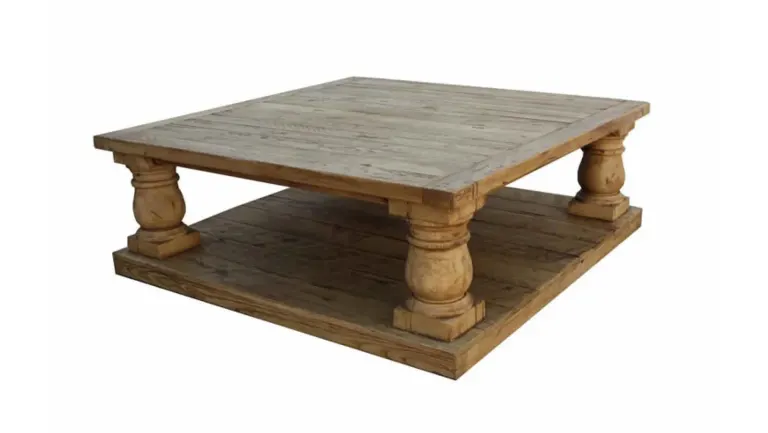
Reclaimed Salvage, Low-VOC Finishes, and Sustainable Export Systems has emerged as a premier sourcing model. Unlike conventional mass-produced furniture that relies on virgin timber harvesting and petrochemical coatings, Türkiye’s specialized distressed-wood table manufacturers combine century-old reclaimed Anatolian structural timbers, zero-VOC botanical and mineral surface patinas, biomass-powered kiln drying, and near-shore low-emission logistics to deliver heirloom dining tables and sculptural coffee tables with verified low embodied carbon.
Backed by Türkiye’s broader furniture manufacturing ecosystem—which generated $4.58 billion to $4.6 billion in net furniture exports in 2025 and sustained strong international expansion across 2026—circular distressed-wood table manufacturing turns ecological stewardship into a measurable commercial advantage. For sustainability directors, European customs compliance officers, and B2B retail buyers, understanding how Turkish ateliers reclaim historic Black Sea chestnut and Taurus cedar beams, supplement supply with FSC-certified imported hardwoods under the Inward Processing Regime (DİR), formulate non-toxic plant-oil and mineral-wax patinas, and substantiate Environmental Product Declarations (EPDs) unlocks a resilient, future-proof supply chain.
1. The Circular Woodworking Ecosystem Across Türkiye’s Regional Production Hubs
Evaluating Circular Timber Economics, Botanical Patinas, and Global Trade in Turkish Distressed-Wood Tables and Coffee Tables: Reclaimed Salvage, Low-VOC Finishes, and Sustainable Export Systems requires mapping how Türkiye’s woodworking clusters organize salvage logistics, primary milling, and low-impact finishing. Rather than treating reclaimed wood as an informal craft byproduct, leading Turkish factories integrate architectural salvage into structured, auditable production lines.
Regional Manufacturing Clusters Driving Circular Distressed-Wood Table Production
1. Bolu, Kastamonu, and Safranbolu (Western Black Sea Heritage Salvage & Timber Belt): Located in a region renowned for historic Ottoman timber-framed architecture, specialized reclamation yards and primary mills here deconstruct century-old chestnut barns, tobacco drying houses, and rural granaries. Facilities operate industrial electromagnetic metal scanners, pressurized vacuum phytosanitation kilns, and biomass boilers fueled by wood offcuts—supplying certified reclaimed timber blanks to export table factories nationwide.
2. Istanbul (Masko, Modoko, Tuzla, Dudullu, and Karaköy Design Studios): Functioning as Türkiye’s architectural design and export headquarters—generating over $3.5 billion in total sectoral exports—Istanbul houses boutique ateliers and OEM/ODM factories that transform reclaimed Anatolian oak, chestnut, and pine into collectible dining tables and organic coffee tables paired with recycled cast iron, PVD-coated stainless steel, and honed Denizli travertine.
3. İnegöl (Bursa): Widely recognized as Türkiye’s solid wood manufacturing capital, İnegöl integrates planetary 304 stainless-steel wire-brushing lines, ammonia fuming chambers, and high-frequency hydraulic presses with closed-loop sawdust briquetting systems—enabling scalable retail production of FSC-certified distressed oak and ash dining tables.
4. İzmir (Torbalı and Karabağlar) & Aegean/Mediterranean Reclamation Corridor: Positioned directly adjacent to deep-water Aegean container ports (Aliağa and Alsancak), İzmir’s export manufacturers draw from historic Aegean olive-press structures and Taurus Mountain cedar roofs to craft coastal-weathered coffee tables and flat-pack extendable dining tables bound for North America and Northern Europe.
5. Ankara (Siteler): Siteler’s master cabinetmakers specialize in bespoke, zero-VOC hand-planed distressed tables and monumental hospitality communal tables (360 cm to 600 cm spans) finished with traditional Turkish beeswax, carnauba, and cold-pressed linseed oil formulations.
Turkish Circular Production Hub Core Sustainable & Salvage Specialization Closed-Loop Energy & Low-VOC Infrastructure Target Global Eco-Conscious Markets
Bolu / Kastamonu / Safranbolu Architectural deconstruction, reclaimed Black Sea chestnut & oak slab prep Conveyor metal scanners, biomass-fired phytosanitation kilns Domestic export factories & EU sustainable ateliers
Istanbul Luxury reclaimed-wood coffee tables, mixed wood + recycled metal/stone tables Zero-VOC hardwax oil booths, reactive mineral patina chambers USA, Switzerland, France, UAE, Saudi Arabia
İnegöl (Bursa) Scalable FSC-certified distressed oak/ash dining & butterfly-leaf tables Sawdust briquetting boilers, closed-loop waterborne spray tunnels Germany, UK, Netherlands, Belgium, Nordic region
İzmir / Aegean Belt Reclaimed Taurus cedar & coastal-weathered pine/ash coffee & dining tables Solar-assisted drying yards, plastic-free honeycomb kraft packaging USA, Canada, UK, Spain, Denmark
Ankara (Siteler) Bespoke diplomatic & boutique hotel distressed communal tables Hand-planed (sistre) craft, botanical oil & natural beeswax finishing Qatar, Saudi Arabia, Germany, CIS
2. Dual-Stream Raw Material Economics: Architectural Salvage vs. Certified Hardwood Imports
A cornerstone of Circular Timber Economics, Botanical Patinas, and Global Trade in Turkish Distressed-Wood Tables and Coffee Tables: Reclaimed Salvage, Low-VOC Finishes, and Sustainable Export Systems is balancing finite reclaimed Anatolian timber with responsibly harvested, duty-free imported hardwoods.
Stream 1: Architectural Salvage of Historic Anatolian Timbers
Türkiye’s centuries-old vernacular architecture across the Black Sea coast, Central Anatolia, and the Taurus Mountains yields dense, slow-grown old-growth wood unavailable in modern commercial forestry:
• Black Sea Sweet Chestnut (Castanea sativa — Kestane): Salvaged from historic roof trusses and granary walls, century-old chestnut possesses rich tannin concentrations, deep cathedral grain, authentic mortise-and-tenon pockets, and high natural resistance to decay (air-dry density 560–600 kg/m³).
• Taurus Cedar (Cedrus libani) & Anatolian Black Pine (Pinus nigra): Reclaimed structural beams exhibit ultra-tight annual rings (15 to 30 rings per inch), natural resinous warmth, and weathered surface checks prized for monolithic rustic coffee tables and farmhouse dining tables.
• Three-Stage Reclamation Conditioning:
1. Electromagnetic Metal Extraction: Every beam passes through conveyor metal detectors to locate and extract hand-forged iron nails, preventing carbide CNC cutter damage and eliminating black ferric-tannate bleeding.
2. Thermal Phytosanitation (65°C–75°C for 48–72 Hours): Computer-controlled kilns sterilize the wood core against any dormant wood-boring larvae without toxic methyl bromide fumigation.
3. Selective Defect Conservation: Rather than discarding character boards, artisans stabilize natural splits with contrasting boxwood or brass dovetail butterfly keys, achieving raw material recovery rates exceeding 85%.
Stream 2: Importing FSC-Certified Hardwoods under HS 4407 & DİR Fiscal Leverage
To execute multi-container retail and hospitality programs requiring standardized dimensions and predictable load-bearing strength, Turkish factories import certified fresh kiln-dried lumber under HS Code 4407:
• European & Slavonian Oak (Quercus robur — HS 4407.91): Imported from FSC/PEFC-certified forestry operations in Croatia, Slovenia, Ukraine, and Romania in Character/Rustic grades (utilizing knotty, mineral-streaked boards that otherwise go underutilized in clear-grade manufacturing).
• American White Oak (Quercus alba) & Ash (Fraxinus americana) (HS 4407.91 / 4407.99): Imported from net-growth-positive U.S. Appalachian forests graded under National Hardwood Lumber Association (NHLA) No. 1 Common and No. 2A Common rules.
• Zero-Duty Fiscal Efficiency via Inward Processing Regime (DİR): Under Türkiye’s Dahilde İşleme Rejimi (DİR) managed by the Turkish Ministry of Trade, certified exporters import sawn hardwood lumber with 0% customs duty and 0% Value Added Tax (KDV) when transformed into finished distressed-wood tables and coffee tables (HS 9403.60) for export.
3. Botanical & Mineral Patina Chemistry: Zero-VOC Surface Engineering
In Circular Timber Economics, Botanical Patinas, and Global Trade in Turkish Distressed-Wood Tables and Coffee Tables: Reclaimed Salvage, Low-VOC Finishes, and Sustainable Export Systems, conventional solvent-borne nitro-cellulose lacquers and heavy-metal chemical stains are replaced by clean-chemistry botanical, mineral, and gas-phase reactions.
Clean-Chemistry Patina & Texturing Protocols
1. 304 Stainless-Steel & Tynex® Planetary Wire-Brushing: Multi-head brushing lines fitted with non-ferrous 304 stainless-steel wire brushes and silicon-carbide nylon brushes excavate soft springwood vessels by 0.8 mm to 2.0 mm, revealing tactile three-dimensional wood grain without chemical etching.
2. Thermal Steam Modification (185°C–212°C Pyrolysis): Solid European ash, oak, and pine are baked in oxygen-free superheated steam chambers—caramelizing hemicelluloses throughout the board thickness to produce a rich antique-walnut tone while reducing equilibrium moisture content by 40%–50% and boosting rot resistance without synthetic preservatives.
3. Closed-Loop Ammonia Vapor Fuming: White oak tables are conditioned in sealed fuming chambers where ammonium hydroxide vapors react with native oak tannins to create a translucent smoked-umber patina (3–5 mm deep); spent vapor is scrubbed and neutralized in closed-loop water-absorption towers with zero atmospheric release.
4. Natural Tannin, Iron-Acetate, and Mineral Lime-Wax Finishes: Finishers utilize botanical walnut-husk extracts (Juglans regia pericarp dye), food-grade ferric-acetate driftwood washes, and natural slaked-lime cerusing waxes blended with Turkish beeswax, carnauba wax, and cold-pressed linseed oil.
5. Zero-VOC Hardwax Oils & Waterborne 2K Dead-Matte Topcoats (3–7 GU): Surfaces are sealed with EU Ecolabel / GREENGUARD Gold certified zero-VOC hardwax oils or 2K waterborne polyurethanes (<30 g/L VOC), passing EN 12720 stain resistance tests against red wine, espresso, and household cleaners while remaining easily spot-repairable over a 50-year service life.
Eco-Patina & Finishing System Active Natural / Low-VOC Chemistry Embodied Carbon & Indoor Air Quality Impact Aesthetic & Performance Outcome
Botanical Walnut-Husk & Tannin Wash Aqueous Juglans regia hull extract + natural oak/chestnut tannins 0 g/L VOC; 100% biodegradable plant-derived colorant Warm, translucent antique-cognac tone that highlights cathedral grain
Thermal Steam Pyrolysis (Thermo-Wood) Superheated steam (185°C–212°C) + wood hemicelluloses (zero chemicals) Biocide-free EN 350 Class 1–2 durability; extends outdoor/indoor lifespan Deep through-thickness weathered brown; 45% lower seasonal swelling
Mineral Lime-Wax Cerusing Slaked calcium hydroxide + Turkish beeswax + carnauba + linseed oil Zero-VOC, solvent-free breathable open-pore wax matrix Soft Belgian-linen chalky white/grey contrast in wire-brushed oak pores
Zero-VOC Plant Hardwax Oil Polymerized vegetable oils + natural waxes (Rubio Monocoat / Osmo) 0 g/L VOC; Cradle-to-Cradle / Eurofins Indoor Air Comfort Gold Dead-matte raw wood feel (4–7 GU); homeowner spot-repairable
Waterborne 2K Dead-Matte Polyurethane Low-VOC aliphatic polyurethane dispersion (<30 g/L VOC) Compliant with EU REACH, CARB Phase 2, and EPA TSCA Title VI Commercial hospitality durability (EN 12720 wine/coffee/heat resistant)
4. Lifecycle Assessment (LCA), Biomass Energy, and Carbon Sequestration Metrics
A decisive competitive advantage in Circular Timber Economics, Botanical Patinas, and Global Trade in Turkish Distressed-Wood Tables and Coffee Tables: Reclaimed Salvage, Low-VOC Finishes, and Sustainable Export Systems is quantifiable carbon accounting. Institutional European and North American retail buyers increasingly require Environmental Product Declarations (EPDs) per ISO 14025 and EN 15804:
1. Biogenic Carbon Storage: Every 45 kg solid oak or reclaimed chestnut dining table sequesters approximately 82 kg of atmospheric CO₂ equivalent (CO₂e) within its timber cellular structure for the entire duration of its 50-to-100-year service life.
2. Closed-Loop Biomass Thermal Generation: Tier-1 Turkish factories capture 99.4% of sawmill offcuts, planer shavings, and sanding dust via central cyclone extraction, compressing the residue into high-calorific wood briquettes that power on-site thermal oil boilers for kiln drying and winter facility heating—cutting fossil natural gas consumption by up to 75%.
3. Near-Shore Freight Emissions Reduction: Shipping finished distressed-wood tables from Istanbul or İnegöl to Central Europe via Euro-6 overland TIR trucks (5–7 days) or short-sea container routes to the UK (14–18 days) generates 60% to 75% lower Scope 3 transport emissions per unit compared to 45-day maritime container routes from East Asia.
5. Global Export Compliance: EUDR Reclaimed Exemptions, Customs Tariffs, and Zero-Plastic Packaging
Navigating international regulatory and sustainability mandates is essential in Circular Timber Economics, Botanical Patinas, and Global Trade in Turkish Distressed-Wood Tables and Coffee Tables: Reclaimed Salvage, Low-VOC Finishes, and Sustainable Export Systems.
EU Deforestation Regulation (EUDR) & Customs Tariff Frameworks
• EUDR Reclaimed-Wood Exemption Dossier: Under Regulation (EU) 2023/1115 (EUDR), tables manufactured from 100% reclaimed/post-consumer wood that has completed its previous lifecycle are exempt from new forest harvest geolocation polygon mandates. Turkish exporters compile a standardized Reclaimed Provenance Verification Packet—containing salvage/demolition purchase invoices, dated pre-milling batch photographs, and thermal kiln phytosanitation logs—for frictionless EU customs clearance under HS Code 9403.60.10.
• Fresh Certified Hardwood Traceability: For distressed tables built from virgin imported or domestic hardwood, exporters provide full GPS harvest plot coordinates, official OGM transport permits (sevk pusulası), and active FSC 100% / FSC Mix Credit Chain-of-Custody license numbers on commercial invoices.
• Zero-Tariff Entry into the EU & UK: Under the EU-Türkiye Customs Union (A.TR Movement Certificate) and the UK-Türkiye Free Trade Agreement (EUR.1 Certificate), Turkish distressed-wood tables enter all 27 EU member states and the United Kingdom at 0% import duty, while U.S. importers benefit from 16-to-24-day transatlantic transit insulated from punitive tariffs on Chinese furniture.
Zero-Plastic Circular Export Packaging Engineering
• 100% Recyclable Honeycomb Paperboard & Molded Pulp: Leading Turkish eco-exporters replace expanded polystyrene (Styrofoam) blocks with die-cut FSC-certified corrugated honeycomb edge profiles, molded paper-pulp corner guards, and 275-lb burst-strength 5-ply recycled kraft cartons validated to ISTA 3A drop-test standards.
• Chemical-Free ISPM-15 Pallets: All wooden pallets and heavy slab crates undergo ISPM-15 heat treatment (56°C core temperature for 30 minutes) with zero chemical fumigation.