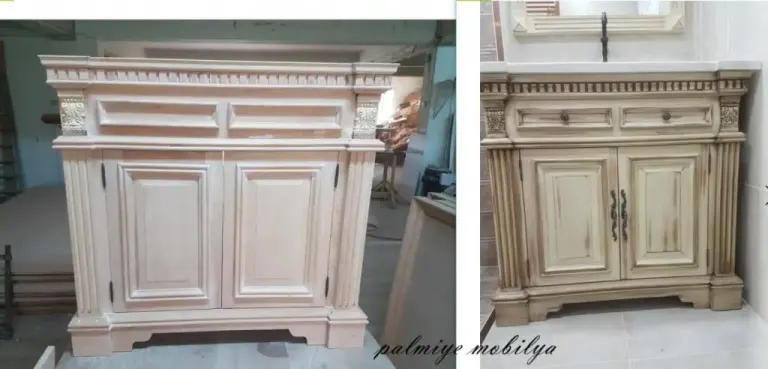
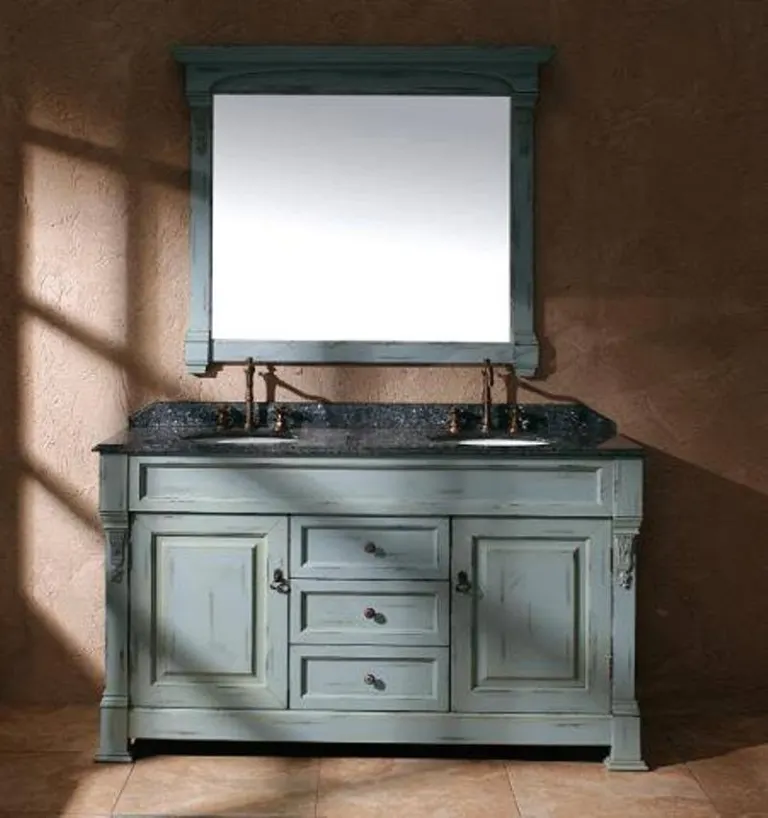
Distressed Solid Wood Bathroom Vanity Models: Timber Aging Techniques, Moisture Sealing, and Rustic Architectural Joinery
Distressed solid wood bathroom vanity models bridge the divide between authentic historical character and modern wet-zone engineering. Unlike mass-produced synthetic laminates that mimic wood grain with repeating photographic prints, genuine distressed timber cabinetry showcases organic knots, hand-planed undulations, wire-brushed grain relief, and weathered patinas that hide daily wear while grounding sterile tiled bathrooms in tactile warmth. However, intentionally texturing solid wood—by opening grain pores, distressing edges, or using reclaimed barn timbers—introduces unique moisture-absorption pathways that must be carefully engineered against bathroom steam and standing water.
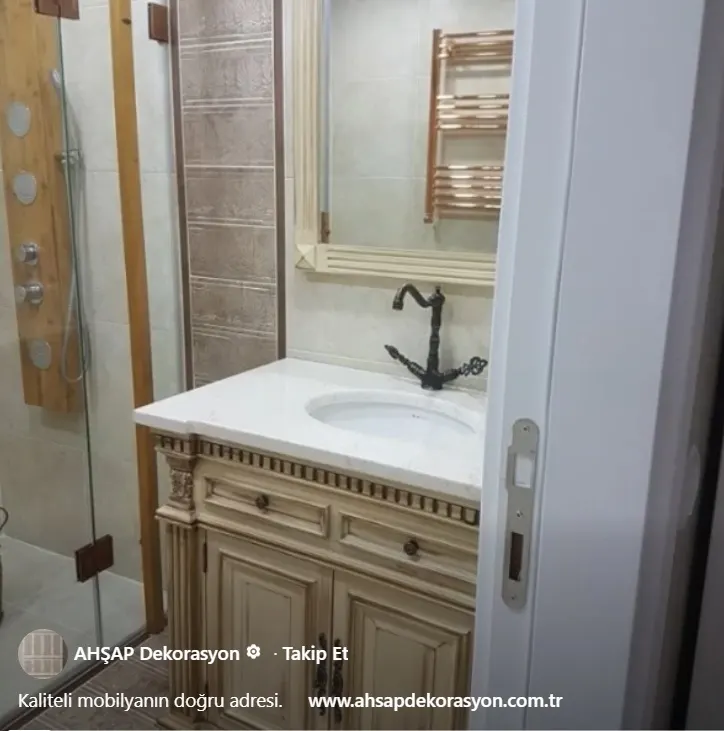
This comprehensive technical guide examines the timber species selection, mechanical and chemical distressing methods, joinery reinforcement, waterproof finishing chemistry, and countertop pairing strategies behind distressed solid wood bathroom vanity models.
1. Timber Selection: Reclaimed Barn Wood vs. New-Growth Distressed Hardwoods
The structural integrity of distressed solid wood bathroom vanity models begins with choosing between authentic salvaged antique lumber and freshly milled kiln-dried hardwoods subjected to controlled artisan aging.
Reclaimed Architectural Timber (Antique Oak, Chestnut, and Heart Pine)
Salvaged from century-old barns, industrial warehouses, and railway trestles, reclaimed timber offers unmatched authenticity—complete with original mortise pockets, iron nail holes, saw kerf marks, and tight old-growth annular rings.
• Technical Advantage: Old-growth timber grew slowly in dense forests, producing higher wood density and superior dimensional stability compared to fast-grown plantation lumber.
• Mandatory Pre-Milling Protocols: Reclaimed boards must undergo metal-detector scanning to remove embedded iron nails, followed by kiln sterilization at 60°C–70°C to eliminate powderpost beetles, larvae, and dormant fungal spores before entering a joinery workshop.
Newly Milled Kiln-Dried Hardwoods (Knotty Alder, White Oak, and Hickory)
For projects requiring consistent board thicknesses and predictable moisture levels (6%–8% equilibrium moisture content), cabinetmakers select character-grade new lumber rich in natural knots and mineral streaks, then apply mechanical distressing.
• Knotty White Oak (Quercus alba): Closed cellular tyloses prevent water wicking through end-grain and distressed crevices.
• Rustic Hickory (Carya ovata): Exceptionally hard (1,820 lbf Janka rating) with dramatic contrast between pale sapwood and dark heartwood.
• Knotty Alder (Alnus rubra): Softer grain that accepts hand-rasping, wormhole simulation, and multi-layered glazes with rich tonal depth.
Timber Source Moisture Stability Authenticity of Patina Preparation Requirements Best Design Aesthetic
Reclaimed White Oak Very High (old-growth density) Genuine century-old weathering Metal extraction, kiln sterilization, planing Industrial loft, rustic farmhouse, heritage estates
Reclaimed Heart Pine High (rich in natural pine resin) Deep amber oxidation, nail holes Resin stabilization, surface sanding Warm traditional, mountain lodge, vintage coastal
Distressed Knotty Oak High (closed-pore structure) Controlled wire-brushed & hand-scraped Epoxy knot filling, 2K matte sealing Modern organic, transitional, Mediterranean
Distressed Knotty Alder Moderate (requires thorough sealing) Uniform rustic distressing and glazing Full-panel catalyzed varnish encapsulation French country, Tuscan, Spanish revival
2. Artisan Distressing Techniques and Their Structural Impact
Creating authentic texture on distressed solid wood bathroom vanity models involves physical and chemical interventions. Understanding each technique ensures surface texture never compromises waterproof performance.
1. Wire-Brushing (Grain Raising): Rotating steel or stiff nylon abrasive brushes scour away the softer earlywood (spring growth) while leaving the harder latewood (summer growth) raised in tactile relief.
• Moisture Note: Wire-brushing opens deep longitudinal grain channels that require spray-applied low-viscosity sealers so finish penetrates the bottom of every groove.
2. Hand-Scraping and Skip-Planing: Craftsmen use curved hand planes or drawknives to carve subtle, irregular scallops across plank surfaces, replicating the look of 18th-century hand-dressed timber.
3. Eased and Burnished Edge Distressing: Sharp 90-degree cabinet corners are softened using rasps, chains, and burnishing rods. Beyond aesthetic aging, rounding sharp corners prevents finish chipping and protects coatings from water pooling along fragile sharp edges.
4. Epoxy Void and Knot Stabilization: Open splits, checks, and loose knots inherent to distressed solid wood bathroom vanity models are filled with tinted black, amber, or clear two-part structural epoxy resin. This creates a level, sanitary surface that prevents soap scum and moisture from collecting inside natural wood fissures.
5. Reactive Tannin Staining (Iron Acetate & Fuming): Rather than hiding grain beneath opaque pigment, artisans apply iron-acetate solutions (vinegar and dissolved steel wool) or ammonia fuming to react chemically with natural tannins in oak, producing authentic weathered gray, driftwood, and smoked-umber tones from within the wood fibers.
3. Joinery Engineering for Textured Solid Wood Carcasses
Solid wood expands and contracts across its width as bathroom humidity fluctuates between 40% during dry winters and 90% after hot showers. Distressed solid wood bathroom vanity models must be engineered with traditional movement-allowing joinery rather than rigid box construction.
• Breadboard Ends and Floating Frame-and-Panel Doors: Side panels and cabinet doors utilize mortise-and-tenon perimeter frames housing floating center planks seated in deep grooves with elastomeric space balls. As humidity swells the planks, they expand silently inside the frame without splitting glue joints.
• Dovetail Drawer Boxes with Moisture-Sealed Bottoms: Solid maple or Baltic birch dovetail drawers are paired with concealed undermount soft-close slides (Blum Tandem or Salice Futura) rated for 35 to 45 kilograms, keeping metal mechanisms hidden beneath the timber aesthetic.
• Marine-Grade Plywood Interior Carcass: Even on bespoke distressed solid wood bathroom vanity models, master builders frequently construct the concealed interior box from 18mm marine-grade birch plywood veneered to match the solid hardwood face frame, doors, and end panels. This hybrid engineering prevents carcass warping while delivering solid-timber thickness on all visible surfaces.
4. Waterproofing Textured Surfaces: Finishing Chemistry
The greatest technical challenge with distressed solid wood bathroom vanity models is sealing uneven, wire-brushed, and hand-scraped topography against standing water without filling in the texture with a thick, plastic-looking gloss coat.
• Two-Component (2K) Catalyzed Matte Polyurethane: High-volume low-pressure (HVLP) spray application atomizes low-viscosity 2K polyurethane into microscopic droplets that coat deep wire-brushed valleys and nail holes evenly. Once chemically cross-linked, a dead-matte (5-sheen) 2K polyurethane creates an impenetrable waterproof barrier while preserving the raw, dry tactile feel of aged timber.
• Conversion Varnish with Penetrating Sealer Base: A high-build catalyzed vinyl sealer penetrates deep into porous distressed fibers, followed by two coats of moisture-cured conversion varnish resistant to toothpaste, alcohol, and cosmetic solvents.
• Avoiding Unsealed Wax or Raw Linseed Oil: While antique living-room furniture is often finished with paste wax or raw tung oil, un-catalyzed oils spot white when exposed to water droplets and harbor mildew inside distressed crevices in humid bathrooms.
5. Countertop, Basin, and Hardware Pairings
Balancing heavy visual texture on distressed solid wood bathroom vanity models requires thoughtful pairing of countertops and hardware so the vanity feels cohesive rather than visually overwhelming.
Countertop Pairings
• Honed Carrara or Calacatta Marble: Crisp white and cool gray veined marble provides clean architectural contrast against warm, heavily textured reclaimed oak or pine.
• Leathered Black Granite or Soapstone: A textured "leathered" granite slab echoes the tactile organic feel of hand-scraped wood while delivering bullet-proof acid and stain resistance.
• Thick Concrete or Trough-Style Integrated Sinks: Cast concrete countertops with integrated ramp drains complement industrial and farmhouse distressed solid wood bathroom vanity models.
Hardware and Plumbing Fixtures
• Living Finishes (Unlacquered Brass and Oil-Rubbed Bronze): Hardware that naturally develops its own patina over time harmonizes with aged wood better than sterile mirror-chrome.
• Hand-Forged Iron Pulls and Strap Hinges: For rustic farmhouse or Spanish revival vanities, powder-coated or wax-sealed forged iron ring pulls and clavos accents reinforce historical authenticity without rusting in damp air.
6. Installation and Long-Term Care Protocols
To maximize the lifespan of distressed solid wood bathroom vanity models, installers and homeowners should follow three essential practices:
1. Isolated Floor Contact: For freestanding distressed vanities with solid wood legs or plinths, seal the bottom end-grain of every leg with two coats of marine epoxy and rest the feet on concealed 3mm nylon glides. This prevents floor-mopping water from wicking upward into the timber end-grain.
2. Flexible Perimeter Sealing: Apply a neat bead of color-matched, neutral-cure sanitary silicone where the stone backsplash or countertop meets the wall tile, preventing water run-off from dripping behind the rear wood apron.
3. Gentle pH-Neutral Maintenance: Wipe standing water puddles promptly with a soft microfiber cloth and clean wood surfaces strictly with pH-neutral wood soap—never bleach, ammonia, or abrasive scrubbing pads that can abrade the protective matte topcoat off raised grain ridges.
Would you like to continue with additional articles on distressed solid wood bathroom vanity models, or focus on a specific angle such as: