Eco Lodge Wooden Doors: Choosing Natural Materials and Low-Impact Finishes
Eco lodge wooden doors can look natural and still stand up to daily hotel use, if you choose the right timber, core and finish. This guide explains the trade-offs so you can specify with confidence.
Eco lodge wooden doors need to do two things at once: express a natural, low-impact brand and survive years of guests, luggage, humidity and housekeeping. The good news is that both goals are achievable, but only if you are honest about where a raw, untreated look ends and where practical protection begins. This guide walks through materials, finishes, cores and care so you can brief a factory clearly.
What "eco" should mean in a door specification
Eco is a brand promise, but a door specification needs measurable choices. Before choosing a design, decide which of the following matter most for your property:
- Responsible timber sourcing: traceable wood from managed forests, with documents you can show to guests or certifiers.
- Low-emission materials: boards and adhesives with low formaldehyde emission classes, and finishes with low solvent content.
- Longevity: a door that lasts and can be repaired is often more sustainable than a very natural door replaced after a few years.
- Natural appearance: visible grain, soft sheen and a tactile surface rather than thick, glossy coatings.
Ranking these priorities early prevents conflicts later. For example, a fully raw surface looks the most natural, but it is also the most vulnerable to stains and moisture.
Choosing the timber and surface build-up
Solid wood
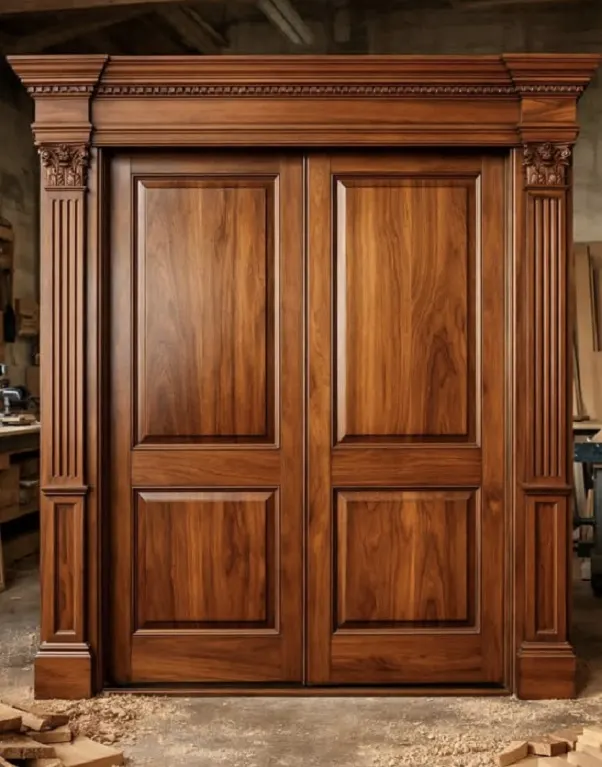
Solid timber leaves have a genuine, warm character and can be sanded and refinished on site. They also move with humidity, so they suit well-designed frames, sensible leaf sizes and stable climates better than extreme conditions. In a jungle or coastal lodge, solid wood needs careful species selection and sealed edges.
Veneered engineered leaves
A real wood veneer on a stable core gives you the natural grain with less movement than solid timber. For most eco lodge room doors, this is the practical middle path: the surface is real wood, while the engineered structure helps the leaf stay flat. Veneer thickness matters if you expect future refinishing, so ask the factory what is possible.
Species and look
Oak, ash and walnut are common choices for interior doors, and each takes oil or lacquer differently. Lighter species show a calm, Scandinavian look; darker ones hide marks but show dust and fingerprints more. Request physical samples in the finish you plan to use, because a photo will not show the real texture.
Natural finishes compared
Finish is where eco intentions and durability meet. The table below gives a general comparison; exact performance depends on the product and the supplier's process.
| Finish | Look and feel | Durability in hotel use | Repair |
|---|---|---|---|
| Hardwax oil | Natural, open-pore, low sheen | Moderate; needs periodic maintenance | Easy, local spot repair |
| Water-based matt lacquer | Subtle, slightly more uniform | Good resistance to scuffs and cleaning | Harder; often needs wider refinishing |
| Natural oil with wax top coat | Very tactile, warm | Lower stain resistance | Simple, but regular |
| Thin natural-look lacquer | Close to raw wood, protected | Good for corridors and rooms | Moderate |
Oil finished wood door: what to expect
An oil finished wood door feels natural and ages gracefully, because small marks blend into the surface and can be touched up locally. The trade-off is maintenance: oiled surfaces absorb stains more readily and need periodic re-oiling, especially around handles and lower areas. If your housekeeping team can follow a simple care routine, oil is an excellent fit for a nature-led brand.
Natural finish doors that need less upkeep
Many buyers want natural finish doors without a heavy maintenance plan. A thin, matt water-based lacquer can preserve the open-grain appearance while giving better resistance to cleaning products and scuffs. It is often the sensible choice for busy corridors and shared buildings, with oil reserved for feature doors in lounges or private villas.
Core and construction choices for lower impact
The visible surface is only part of the story. The core determines weight, stability, acoustic behaviour and emissions.
- Solid timber or stave cores: natural and stable when well made, but heavier and usually costlier.
- Particleboard or MDF-based cores: consistent and economical; ask about emission class and whether low-emission adhesives are used.
- Honeycomb cores: light and efficient with material, but less suited to heavy hardware or high-impact areas without reinforcement.
If indoor air quality is part of your brand story, ask the factory for the emission class of the boards and adhesives, and request the supporting test documentation. Do not rely on general claims; a data sheet is the right way to verify.
Designing for the lodge environment
Humidity and temperature swings
Rainforest, coastal and mountain lodges all stress wood differently. High humidity can cause swelling and sticking, while heated interiors in cold climates can cause drying and small movements. Sealing all edges, including top and bottom, is one of the simplest ways to protect a door in any climate.
Semi-open layouts
Many eco lodges blend indoor and outdoor space, with terraces, covered walkways and open lobbies. Interior-grade doors are not intended for direct sun and rain. If a door sees weather exposure, tell the factory so it can propose a suitable construction, or consider a different door type for that opening.
Simple, repairable details
Plain flush or lightly grooved models are easier to maintain than complex profiled designs, since there are fewer corners to trap dust and fewer areas to refinish. A natural look often comes from the material rather than the ornament, which also helps keep cost under control.
Hardware and details that match the concept
Natural doors can be undermined by hardware that feels out of place. Consider matt black, brushed brass or bronze-toned finishes and simple lever handles that suit the timber tone. Concealed hinges and recessed pulls give a calm, minimal look, but check that the hardware load rating suits the leaf weight.
If you plan electronic locks, share the lock model early so the factory can prepare routing and cable paths. Retrofitting a lock into a finished natural door risks visible damage to the surface.
Approving samples before the full order
Natural materials vary. Grain, tone and texture differ from leaf to leaf, and that variation is part of the appeal. To avoid disagreements, approve a sample or a mock-up door under the lighting of the actual lodge, and agree on an acceptable range of variation in writing.
Ask for the finish sample on the exact species and veneer you will order, and test it with a cleaning cloth and a few typical marks. A short real-world test often reveals more than a catalogue sheet.
Care planning for housekeeping teams
Sustainability does not end at delivery. A simple care plan extends life and avoids unnecessary replacement:
- Clean with a lightly damp cloth and mild, non-abrasive products.
- Avoid aggressive chemicals, especially on oiled surfaces.
- Touch up or re-oil high-contact areas on a regular schedule agreed with the finish supplier.
- Report loose hinges or sticking early, before damage spreads.
Supplying a small touch-up kit and written care instructions at handover helps the team keep the natural look consistent.
Shipping and documentation for international lodges
Eco lodges are often in remote locations, so packing and handling deserve attention. Natural finishes can mark easily, so protective film, edge guards and sturdy cartons or crates are important. Discuss delivery terms such as FOB, CIF or DAP early, along with storage conditions on site, because stacking doors in a damp or hot storage area can cause problems before installation begins.
If sustainability reporting matters to your brand, request timber documentation and emission data at the quotation stage, so there are no surprises later.
Conclusion
The most successful eco lodge wooden doors combine a real timber surface, a stable construction and a finish matched to how the building is actually used. Choose oil where you can maintain it and a thin matt lacquer where you need easier upkeep, and always approve samples under real lighting. If you are planning a lodge or nature resort, send us your door schedule or drawings, and we will suggest suitable materials, finishes and shipping options for your project.
Sıkça Sorulan Sorular
Are wooden doors suitable for eco lodges in humid climates?
Yes, if the specification is right. Choose a stable construction such as a veneered engineered leaf or well-selected solid timber, seal all edges including top and bottom, and keep leaf sizes reasonable. Tell the factory about the climate so it can recommend suitable materials and finishes.
Is an oil finished wood door durable enough for hotel use?
It can be, with realistic expectations. Oil gives a natural, repairable surface, but it is more sensitive to stains and needs periodic maintenance. It works well for feature doors or properties with a clear housekeeping routine; busy corridors may suit a thin matt lacquer better.
What makes sustainable resort doors different from standard doors?
Mainly the documentation and material choices: traceable timber, low-emission boards and adhesives, low-solvent finishes and a construction that lasts and can be repaired. Ask the manufacturer for supporting documents rather than relying on general statements.
Can natural finish doors look the same across the whole lodge?
Wood varies naturally in grain and tone, so exact uniformity is not realistic. You can control the range by approving samples, specifying veneer selection and agreeing acceptable variation before production. Many eco brands treat this variation as part of the character.
Can interior wooden doors be used on open terraces?
Standard interior doors are not designed for direct sun and rain. If a door is exposed to weather, tell the factory so it can propose a suitable construction, or consider a different door type for that opening.
Every hotel project is different. Send us your drawings or room schedule for a tailored proposal on materials, lead time and shipping.