Endüstriyel Mühendislik, Odun Anatomisi ve Global FF&E Standartlarında Natural Solid Wood Console Production Başarı Rehberi
The design, planning, and procurement of furniture, fixtures, and equipment (FF&E) within premium hospitality developments, corporate headquarters, and high-end residential projects present complex engineering requirements. At the center of this precise industry sits natural solid wood console production. Far from a basic carpentry trade, commercial console manufacturing is a rigorous material science discipline that integrates multi-axis computerized automation, thermodynamic timber seasoning, structural load balancing, and advanced polymer surface chemistry.
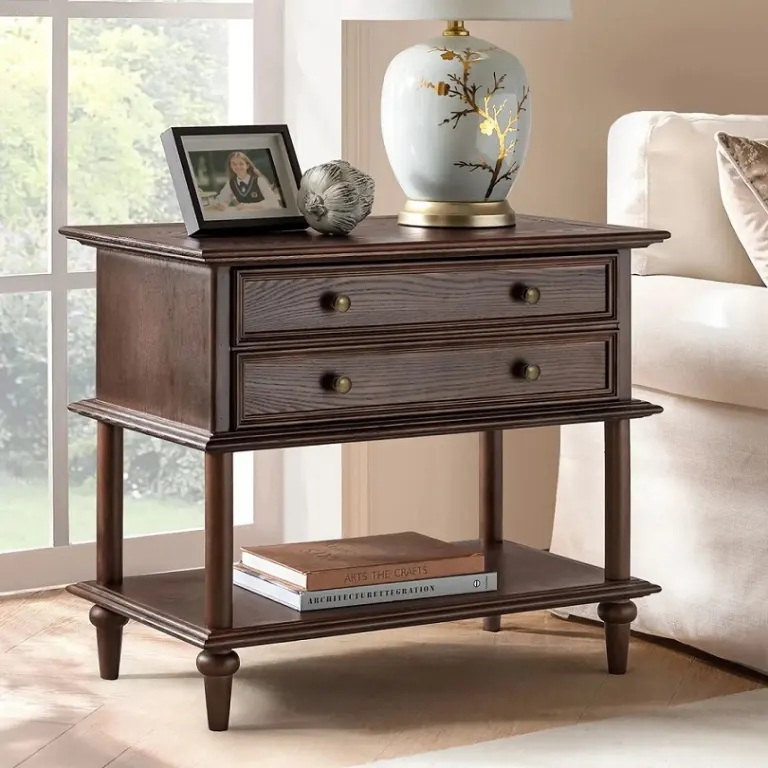
Consoles placed in luxury hotel suites, corporate lobbies, or fine dining halls face intense operational strain. They must support heavy static loads from integrated natural stone (marble, quartzite) tops, handle continuous dynamic forces on doors and drawers, and survive microclimatic shifts caused by automated commercial HVAC systems. While low-cost composite panels (such as particleboard or standard MDF) are prone to structural sagging, joint failures, and formaldehit off-gassing, international specifiers prioritize authentic hardwood cores. Building true contract-grade durability, however, requires a strict, data-driven approach to every step of production.
This technical blueprint breaks down the end-to-end parameters of natural solid wood console production, evaluating macro-botanical physics, industrial kiln-drying, multi-material engineering, high-performance topcoats, and global logistics optimization.
1. Botanical Physics: Macro-Anatomy and Mechanical Wear Classes
To establish a reliable specification framework for natural solid wood console production, procurement teams must look past superficial grain aesthetics. Wood is a complex, anisotropic, and hygroscopic polymer matrix made of parallel cellulose strands bound together within an organic lignin network. Its mechanical strength parameters, tensile values, and shear resistance vary dramatically depending on whether forces are applied parallel or perpendicular to the natural wood grain lines.
▲ Longitudinal Axis (Parallel to grain - Highest tensile strength)
│
│ / Radial Axis (Perpendicular to growth rings)
│ /
│ /
└──────────────► Tangential Axis (Tangent to growth rings - Highest shrinkage risk)
Janka Hardness and Cellular Density Profiles
The Janka hardness test calculates a wood species' structural resistance to scratching, impact denting, and mechanical abrasion. It measures the force (expressed in pounds-force, or lbf) required to embed an 11.28 mm diameter steel ball into the timber face to half its diameter. For heavy-use commercial settings, the core species selected for natural solid wood console production focus on dense hardwoods:
• European White Oak (Quercus robur): Features an average dry density of 720–750 kg/m³ and a Janka hardness rating of 1,360 lbf. Its unique cellular anatomy features extensive tyloses—organic bubble-like plugs that naturally seal its water-transporting vascular bundles (xylem). This blocks liquid or vapor penetration, making White Oak ideal for heavy-use restaurant tables, portals, and entry doors.
• American Black Walnut (Juglans nigra): Offering a Janka value of 1,010 lbf, Black Walnut represents the pinnacle of luxury casegood manufacturing. While slightly softer than Oak, its low volumetric shrinkage metrics make it highly stable over time.
• European Ash (Fraxinus excelsior): Possessing a Janka rating of 1,320 lbf, this hardwood offers long, interlocking fiber structures that deliver excellent shock absorption. It reacts beautifully to industrial steam-bending workflows, making it a premier material for curved restaurant seating and complex contract chair frames.
The Tangential-to-Radial (T/R) Shrinkage Coefficient
As wood fibers interact with ambient air, they constantly absorb or release water vapor to match the surrounding Equilibrium Moisture Content (EMC). This movement is highly uneven; timber expands and contracts roughly twice as much along its growth rings (tangential axis) as it does across them (radial axis). This uneven movement can cause wood to twist, cup, or split.
To manage this risk, engineers overseeing natural solid wood console production evaluate the Tangential-to-Radial shrinkage ratio:
\(\text{T/R\ Ratio}=\frac{\%\text{\ Tangential\ Shrinkage}}{\%\text{\ Radial\ Shrinkage}}\)
Species with a T/R ratio falling between 1.0 and 1.5 exhibit balanced, uniform movement in all directions. White Oak maintains an excellent structural profile with a T/R ratio of approximately 1.5.
Furthermore, during the log sawing phase, premium mills utilize Rift-Sawn or Quarter-Sawn milling techniques. This places the wood grain lines perpendicular to the panel face, maximizing the dimensional stability of the finished piece.
2. Industrial Kiln-Drying Technology and Subsurface Moisture Stabilization
Raw timber must be properly seasoned before it enters the manufacturing line. The primary operational risk within natural solid wood console production is the danger of post-delivery wood movement. If a factory utilizes wood with inaccurate internal moisture levels, the finished casegoods will cup, warp, or crack open as soon as the building's high-performance HVAC systems are turned on.
┌──────────────────────────────────────────────────────────────────────────────┐
│ INDUSTRIAL KILN-DRYING THERMAL STAGES │
├──────────────────────────────────────────────────────────────────────────────┤
│ 1. Preliminary Air Seasoning (Reduces initial fiber moisture saturation) │
├──────────────────────────────────────────────────────────────────────────────┤
│ 2. Pre-Heating Phase (Gradual thermal ramp-up under high relative humidity) │
├──────────────────────────────────────────────────────────────────────────────┤
│ 3. Controlled Desiccation (Computerized drying loops targeting a tight 8%-10% EMC)│
├──────────────────────────────────────────────────────────────────────────────┤
│ 4. Stress Relief Equalization (Moisture re-introduction to relax fiber stress)│
└──────────────────────────────────────────────────────────────────────────────┘
Automated Conventional and Vacuum-Frequency Kiln Networks
Advanced production plants handling natural solid wood console production use computerized kiln drying systems to guarantee absolute structural stability:
• Automated Conventional Kilns: Timber boards are neatly stacked with wood stickers separating each layer. Fully automated climate systems monitor and adjust the dry-bulb and wet-bulb temperatures over several weeks, precisely lowering the moisture levels based on the wood species and thickness.
• Vacuum-Frequency (Vacuum-Dried) Chambers: For thick wood slabs or solid live-edge tables, vacuum chambers are used. By dropping the internal air pressure, the boiling point of water is significantly lowered. This allows subsurface moisture to migrate smoothly to the wood surface without causing cell collapse or internal checking cracks, speeding up drying times up to fourfold.
Moisture Calibration for Worldwide Microclimates
Experienced exporters driving natural solid wood console production calibrate the final core moisture levels of the wood to match the specific environment of the target destination:
• Arid and Heavily Air-Conditioned Environments (GCC Countries, Desert Regimes): Timber is meticulously conditioned down to a tight 6% to 8% moisture content.
• Temperate Industrial Climates (UK, Western Europe, Central Europe): Wood fibers are stabilized at an optimal 8% to 10% moisture content.
• Equatorial High-Humidity Corridors (Tropical Coastal Resorts): The internal moisture baseline is set at 11% to 13% to prevent moisture starvation and sudden wood expansion after delivery.
3. High-Precision Joinery Design and CNC Chassis Engineering
The lifecycle of commercial furniture depends on the strength of its joints. Under high-frequency usage, basic residential joints like pocket screws or hardware cams loosen rapidly. The sector of natural solid wood console production utilizes automated multi-axis CNC machinery networks to integrate classic mechanical joinery with modern production speed.
[ Solid Wood Raw Lumber ] ──► [ 5-Axis CNC Milling & Shaping ] ──► [ PUR Structural Glue Injection ]
│
[ Industrial Finish Lines ] ◄── [ Multi-Point Load Stress Audits ] ◄───────────┘
CNC Blind Mortise and Tenon Integration
For casegood carcases, vertical partitions, and leg frames, automated production relies on blind mortise and tenon joinery. Cut on precision multi-axis CNC machines with tolerances under ± 0.02 mm, the structural tenon is engineered to occupy exactly two-thirds (2/3) of the receiving rail's thickness. This dimension maintains the maximum shear strength of the interlocking timber components and prevents cracking under heavy vertical static loads.
Industrial Dovetail and Polyurethane (PUR) Adhesives
• Drawer Box Dovetailing: All drawer configurations feature English or French locking Dovetail profiles. This geometric interlocking structure resists high pull forces, making it far superior to simple brad-nailed or butt-jointed assemblies.
• Reactive PUR Adhesives: Traditional water-based polyvinyl acetate (PVA) wood glues degrade and crystallize over time when exposed to the deep temperature and humidity shifts of commercial properties. Natural solid wood console production utilizes cross-linking Reactive Polyurethane (PUR) hot-melt adhesives. PUR glues cure through a chemical reaction with the wood's inner cellular moisture, creating an unbreakable polymer mesh that moves with the timber without separating.
4. Multi-Material Engineering: Stone, Glass, and Metal Interlocking
Modern luxury casegoods frequently pair natural solid wood structures with cool materials like marble tops, glass doors, and architectural metal bands. Managing the different expansion rates of these materials is a key focus within natural solid wood console production.
Managing Movement with Slotted Fastening
Solid wood reacts continuously to ambient relative humidity, while metal components expand and contract based on temperature fluctuations. If an architectural brass band or a structural stainless steel base (AISI 316 / 304) is anchored tightly to a wide solid wood panel, the wood's natural movement will eventually warp the metal or split the timber.
[ CONVENTIONAL RIGID FASTENING ] [ INDUSTRIAL SLOTTED TRACK ASSEMBLY ]
(Cracks panel under humidity) (Allows free atmospheric expansion)
┌───────────────┐ ┌───────────────┐
│ Metal Band │ │ Metal Band │
├───────────────┤ ├───────────────┤
│ Rigid Screw │ │ Washer Screw │
│ (No Movement) │ │ (Slides Free) │
└───────────────┘ └───────────────┘
◄─────────────►
Oval Slotted Channel
To eliminate this stress, all mounting metal tracks feature oval, slotted channels. Washer screws are driven straight into the center of these channels, allowing the solid timber to expand and contract smoothly beneath the metal frame without generating structural tension.
Tannic Acid Isolation Strategy
Timbers such as Oak carry high levels of natural tannic acid. When standard iron or zinc-plated steel screws are used in humid conditions, they trigger a chemical reaction that creates dark bluish-black iron-tannate stains on the wood. To preserve the appearance of the piece, the specification guidelines for natural solid wood console production mandate the use of stainless steel, solid brass, or specially coated technical polymer fasteners.
Weight Distribution for Natural Stone Slabs
When heavy marble, granite, or quartzite slabs are added as top counter surfaces, the immense weight can cause casegood frames to sag over time. Internal console skeletons are engineered with hidden vertical solid timber supports or internal structural steel boxes. These elements transfer the heavy vertical weight straight down to the adjustable floor glides. High-density elastomer cushions are placed between the stone and wood surfaces to absorb sudden shocks and allow the materials to adjust independently.
5. Industrial Surface Finish Barriers and Chemical Protection
Raw wood will degrade quickly if its surface is not protected from liquid spills, daily sanitizing, and mechanical wear. The professional natural solid wood console production sector utilizes industrial topcoats engineered to surpass international chemical resistance (EN 12720) and scratch resistance (EN 438) test standards.
┌──────────────────────────────────────────────────────────────────────────────┐
│ FINISH RESIN PERFORMANCE MATRIX │
├──────────────────────────────┬──────────────────────────────┬────────────────┤
│ Finish System │ Chemical/Stain Resistance │ Film Elasticity│
├──────────────────────────────┼──────────────────────────────┼────────────────┤
│ Two-Component (2K) Polyurethane│ Exceptional (EN 12720) │ Superior │
│ Water-Based UV-Cured Acrylic │ Maximum Performance │ Balanced │
│ Conversion Varnish │ High │ Medium-Low │
└──────────────────────────────┴──────────────────────────────┴────────────────┘
Two-Component (2K) Aliphatic Polyurethane Systems
For luxury casegoods exposed to everyday usage, a 2K aliphatic polyurethane system is the industry standard.
• Cross-Linked Molecular Network: The coating relies on a chemical reaction between an acrylic polyol base (Component A) and an aliphatic polyisocyanate catalyst (Component B), forming a highly cross-linked polymer film.
• Vapor Barrier Protection: The cured layer acts as a tough shield that blocks liquid and moisture entry while retaining high elasticity. This lets the coating expand and contract along with the wood's natural movement without cracking, clouding, or peeling.
• UV Discoloration Defense: The inclusion of aliphatic compounds keeps the topcoat crystal clear under UV rays, stopping light woods like Oak or Ash from turning yellow or orange over time.
Flat-Line UV Polymeric Curing
For large hospitality or commercial projects, top-tier factories utilize automated flat-line UV tunnels. Sprayed panels move along a conveyor belt where photo-reactive acrylated polymers are rolled on and cured instantly under high-intensity ultraviolet lamp arrays. This process produces an ultra-hard finish with zero VOC emissions, allowing completed casegoods to be safely packed for shipping straight off the production line.
6. Sustainable Sourcing, Indoor Air Safety, and TCO Analysis
Modern international developers must balance style and durability with environmental and health certifications like LEED v4.1, BREEAM, and the WELL Building Standard. Ensuring a sustainable supply chain is an essential part of the modern world of natural solid wood console production.
┌─────────────────────────────────────────┐
│ Green Procurement Sourcing Framework │
└────────────────────┬────────────────────┘
│
┌─────────────────────────┴─────────────────────────┐
▼ ▼
┌───────────────────────────┐ ┌───────────────────────────┐
│ FSC Chain-of-Custody │ │ Indoor Air Protection │
├───────────────────────────┤ ├───────────────────────────┤
│ • Validates legal logging │ │ • CARB Phase 2 Compliant │
│ • Assures biodiversity │ │ • TSCA Title VI Certified │
│ • Earns global LEED credit│ │ • Zero Formaldehyde Resins│
└───────────────────────────┘ └───────────────────────────┘
Certified Timber Tracking
Turkish contract manufacturers work alongside major global forestry organizations to verify timber origins. Specifying FSC (Forest Stewardship Council) or PEFC certifications guarantees that all wood components can be traced back to responsibly managed forests that protect local biodiversity and avoid illegal logging.
Protecting Indoor Air Quality with Low-VOC Components
To protect guest wellness in enclosed spaces, factories leading natural solid wood console production use wood adhesives and finishes that meet strict international clean air standards. Substrates and coatings comply with CARB Phase 2 and EPA TSCA Title VI requirements, keeping formaldehyde emissions under 0.05 ppm to help projects secure valuable indoor environmental quality points.
Total Cost of Ownership (TCO) Valuation
When balancing capital expenditure (CAPEX) allocations, global asset managers look past initial purchase costs to calculate long-term value:
[ Lower Upfront Cost - Veneered Composites ] ──────────► [ Strategic Value - Natural Solid Wood Consoles ]
• Lifespan: 3 to 5 Years • Lifespan: 15+ Years
• Chipping or cracking requires complete unit scrap • Surface damage easily sanded & repaired on-site
• Moisture contact triggers panel edge swelling • 2K polyurethane seals provide supreme water resistance
• Forces frequent asset replacement spending cycles • Lowers TCO; maintains brand