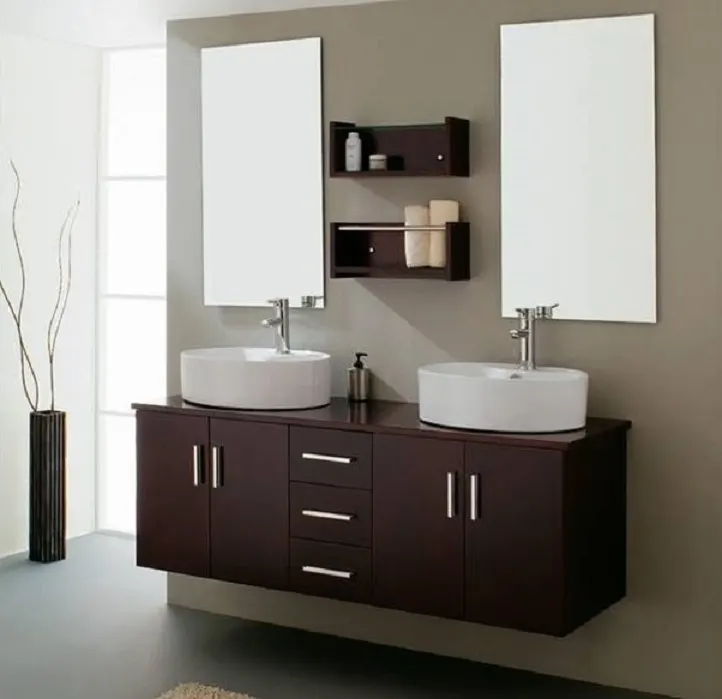
Bathroom Vanity Cabinets for Hotels in Hot Desert Cities: Dust, Heat and Dry Air Effects on Joinery
A hotel bathroom vanity in a hot climate faces a different set of risks from a humid one: shrinkage, glue-line failure, fading and dust. This guide explains what to specify for desert cities.
A hotel bathroom vanity in a hot climate does not fail the way a vanity in a tropical resort fails. Instead of swelling and peeling, desert units tend to shrink, crack, fade and collect dust in every gap. If you are specifying joinery for a hotel in a hot desert city, the priorities change: stable boards, heat-tolerant adhesives, fade-resistant finishes and tight, cleanable details.
This article looks at the dry-heat side of vanity durability. It is written for procurement managers, designers and contractors who need to brief a manufacturer correctly before drawings are approved.
Why desert conditions are not the opposite of a humid problem
It is tempting to assume that dry air is kind to furniture. In practice, a desert hotel bathroom still has hot showers, wet basins and daily cleaning, so the cabinet sees moisture in short, intense bursts, followed by very dry air. This constant swing is harder on joinery than a steady environment.
Air conditioning adds to the effect. Guests arrive from outdoor heat, run the shower, then leave the room cooled to a low temperature. The bathroom cycles between hot, wet and cold, dry conditions several times a day.
The main stresses to plan for
- Low relative humidity: wood and wood-based panels lose moisture and move.
- High surface temperature: sunlight through windows, hot pipes and lighting can warm fronts and tops.
- Fine dust: it settles in grooves, drawer runners, hinge cups and open shelves.
- UV exposure: bathrooms with glazing or skylights can fade veneers and dark lacquers.
- Temperature cycling: repeated expansion and contraction stresses joints and sealant lines.
Board and core choices for dry heat
The carcass is where dimensional stability matters most. Solid timber is the most vulnerable material in very dry conditions, because it shrinks across the grain and can split or cup. Engineered boards are generally more stable, but quality varies between products.
Consider the following when you brief a factory:
- MDF and particleboard: stable in plane, but edges must be sealed, because bathrooms are still wet areas. Moisture-resistant grades are still worth specifying.
- Plywood: good screw-holding and stability when well made. Check glue type and face veneer quality.
- HPL-faced boards: a balanced construction, with a face and a backer layer, resists warping better than a one-sided finish.
- Solid timber: use it sparingly and in narrow sections, such as frames or edges, with allowance for movement.
Balanced construction is the key idea. A panel with different faces on each side can bow when one side dries faster than the other, so ask your manufacturer how the back and inner faces are finished.
Adhesives, edge banding and glue lines
Heat is where adhesives show their limits. Edge banding applied with a low-quality hot-melt can soften and lift when a cabinet sits near a sunny window, a heated towel rail or a spotlight. This usually starts at corners.
Compare the main edge options for hot environments:
| Edge type | Heat behaviour | Notes for desert projects |
|---|---|---|
| PVC / ABS with standard hot-melt | Can soften under sustained heat | Acceptable away from heat sources; check adhesive spec |
| Laser or zero-joint edge | Fused to the panel, so there is no visible glue line | Better resistance to lifting and dust traps |
| PUR adhesive edge | Higher heat and moisture resistance | Good option for wet-and-hot bathrooms |
| Solid timber edge | Moves with humidity | Use with allowance for shrinkage |
For a deeper comparison of edge methods, see our separate guide on edge banding. The point here is simple: in hot climates, a tight, heat-stable edge also helps with cleaning, because dust cannot collect in an open joint.
Finishes: fade, heat and cleaning
Finishes in a desert hotel need to resist more than water. Strong light, high temperatures and frequent cleaning all play a part.
Lacquer
Good polyurethane or similar lacquers perform well, but very dark colours show dust and micro-scratches more easily. Glossy finishes also reveal fingerprints. A matte or satin finish tends to be more forgiving in daily operation.
Veneer
Natural veneer can lighten or darken under UV. If the bathroom has strong daylight, ask for a UV-resistant topcoat and keep a reference sample on file so that replacement fronts can be matched later.
HPL and laminate
These surfaces are stable, colourfast and easy to wipe, which makes them a practical choice for high-turnover rooms. Check the product data sheet for light-fastness and heat tolerance rather than assuming.
Stone-effect surfaces
Stone-effect laminates and solid surfaces tolerate heat well, but always confirm the maximum temperature for the specific product, especially near lighting or hot appliances.
Countertops and heat from hair tools
Hair dryers and styling tools are a real source of heat on a hotel vanity. Solid surface, quartz and natural stone resist heat better than many laminates, but none of them should be treated as heat-proof. Thermal shock can mark or crack some stone and engineered stone tops when a very hot object is placed on a cold surface.
Where tools are expected to be used on the counter, consider a designated holder or a pull-out hair dryer drawer, which also keeps the surface clear for housekeeping.
Hardware, runners and dust
Fine desert dust is abrasive. It works its way into drawer runners, soft-close dampers and hinge mechanisms, and over time it can make movement gritty or noisy. Hotel units are opened many times a day, so this adds up.
- Runners: choose commercial-grade slides with good load ratings and a smooth, enclosed or well-protected mechanism.
- Hinges: stainless or well-plated hinges with accessible adjustment screws make site maintenance simpler.
- Soft-close dampers: hot conditions can affect damper oil, so ask the hardware supplier about operating temperature ranges.
- Plastic parts: cheap plastic clips and bushes can become brittle with heat and UV; ask which components are metal.
Design choices also help. Flat fronts with minimal grooves, closed backs and tight reveals leave fewer places for dust to settle than fluted fronts or open shelving.
Sealing and joints in hot, dry bathrooms
Silicone and sealant lines at the wall junction and around the basin are still essential, because the bathroom is wet during use. In hot climates, sealants can harden, shrink or lose adhesion if the wrong product is used or the surface was dusty during application.
Specify a good-quality sanitary sealant, clean and dry the joint before application, and plan periodic inspection. Hairline gaps appear first at corners and ends of the top, so check these during routine maintenance.
Storage and installation on site
Many desert projects are built while the site is hot and dusty, and sometimes before air conditioning is running. Joinery stored in an unconditioned building can be exposed to extreme heat and then moved into a cooled room, which stresses panels and joints.
To reduce risk, discuss the following with your contractor:
- Keep crates closed and off the ground until the installation area is ready.
- Avoid direct sunlight on packed or unpacked units.
- Install after dust-heavy trades, such as plastering and floor sanding, are finished.
- Protect installed units with covers until handover.
A practical specification checklist
When you send enquiry documents for a desert project, include the following so a manufacturer can quote properly:
- City and building type, including expected sun exposure of the bathroom.
- Cooling system and whether rooms are conditioned during construction.
- Preferred finish, colour and sheen, with any UV concerns.
- Top material and heat-tool expectations.
- Hardware level and any brand or equivalent requirements.
- Delivery terms such as FOB or DAP, and site storage conditions.
Next step
If you are planning a hotel in a hot desert city, send us your bathroom drawings or room schedule. We will review the vanity design, suggest suitable boards, edges, finishes and hardware for dry-heat conditions, and prepare a project quotation with shipping options.
Sıkça Sorulan Sorular
Does dry air damage hotel bathroom vanity cabinets?
It can. Low humidity makes wood and wood-based panels lose moisture, which may cause shrinkage, cupping or edge gaps. Balanced board construction, sealed edges and limited use of solid timber reduce the risk, especially when rooms cycle between air conditioning and hot showers.
Which materials suit a hotel bathroom vanity in a hot climate?
Stable engineered boards with balanced construction, HPL or well-lacquered surfaces and heat-stable edge banding are common choices. Solid surface, quartz or stone tops tolerate heat better than many laminates. Always check the data sheet for temperature and light-fastness limits.
How can I protect vanity drawers from desert dust?
Choose commercial-grade runners with good protection, use closed backs and tight reveals, and avoid deep grooves where dust collects. Include drawer and hinge cleaning in routine maintenance, because abrasive dust can make mechanisms gritty over time.
Do dark vanity finishes work in desert hotels?
They can, but dark and glossy finishes show dust, fingerprints and micro-scratches more easily, and some fade under strong light. A matte or satin finish with a UV-resistant topcoat is often easier to maintain in daily hotel operation.
Can hair dryers damage a hotel vanity top?
Yes, repeated heat can mark some laminates, and sudden temperature changes may stress stone or engineered stone. No top should be treated as fully heat-proof. A hair dryer holder or pull-out drawer helps keep hot tools off the surface.
Every hotel project is different. Send us your drawings or room schedule for a tailored proposal on materials, lead time and shipping.