Door Handles and Pull Positions: Standard Heights and Ergonomic Placement for Hotel Doors
Most hotel doors place the handle centre line at roughly 900-1,050 mm above finished floor, but the right figure depends on local codes, accessibility needs and door design. This guide explains the ranges and how to set them on your door schedule.
The usual door handle height for hotel doors is a handle centre line of about 900 to 1,050 mm (35.4 to 41.3 in) above the finished floor level. The exact figure depends on the country, the accessibility rules that apply to your project and the door model itself. Setting it clearly on the door schedule avoids mismatched handles, extra routing on site and awkward rework later.
Below we explain the ranges buyers commonly work with, how a lever handle position interacts with the leaf design, and what a factory needs from you before it machines the door. Always confirm the final figures against the building code and accessibility standard of the destination country, as these differ and are updated from time to time.
What a handle height measurement actually refers to
Many specification problems start because people mean different things by "handle height". Before you write a figure on a drawing, state which point you are measuring and from which datum.
- Handle centre line: the centre of the lever or grip, measured vertically. This is the most common reference on hospitality projects.
- Spindle or latch centre: the point where the lock case and spindle sit. On a standard lever set it matches the handle centre line.
- Finished floor level (FFL): the datum should be the finished floor, not the structural slab. Carpet, stone or timber build-ups change the real position by several millimetres.
If a project has different floor finishes in the room and the corridor, say which side is the reference. Otherwise the same door can end up with two different handle heights depending on who measures it.
Typical door hardware height standard ranges
There is no single global door hardware height standard. Different regions follow different conventions, and national codes often set limits for accessible use. The ranges below are practical working figures, not a substitute for the regulations of your market.
| Item | Common working range (mm) | Approximate imperial |
|---|---|---|
| Lever handle centre line, standard doors | 900-1,050 | 35.4-41.3 in |
| Lever handle on accessible doors | Often within 800-1,100, depending on local code | 31.5-43.3 in |
| Push plate or pull handle, vertical grip centre | 900-1,100 | 35.4-43.3 in |
| Electronic lock reader or keycard position | Set by lock supplier, usually near handle height | Follow supplier drawing |
| Peephole centre line | Commonly 1,350-1,500 | 53.1-59.1 in |
Treat these as starting points for discussion. Some markets prefer a lower figure around 900 mm, while others, particularly where imperial conventions apply, work closer to 36 in to 38 in. Your architect or hardware consultant should confirm the figure that applies to the project.
How handle position affects accessibility
Handle placement is one of the details that accessibility rules care about most, because it decides whether a guest who uses a wheelchair, has limited grip strength or is a child can operate the door independently.
Reach range and operating height
Accessibility standards generally set an upper and lower limit for operable parts. Keeping the handle within a comfortable middle band helps seated users reach it without stretching. If your hotel includes accessible rooms, set their door hardware heights on the door schedule as a separate line rather than assuming standard values will pass.
Handle type matters as much as height
Lever handles are generally easier to operate than round knobs, because they can be pushed down with a forearm or elbow and need no tight grip. For accessible rooms and bathrooms, a lever with a return end, which turns back toward the door, reduces the risk of clothing or bags catching on the handle.
Distance from the door edge and the wall
The handle centre line is not only about height. The horizontal distance from the leading edge of the door to the handle matters too, because it determines how much clear space a hand needs. On narrow openings or doors that open against a side wall, check that there is enough room to grip and turn the handle comfortably.
How door model design changes the handle position
A handle cannot be placed anywhere on a door; the leaf construction and surface design affect what is possible. Discuss handle height at the door model stage, not after the design is approved.
- Flush doors: the simplest case. The handle sits on a plain surface, and the lock case position can be moved easily within the lock block zone.
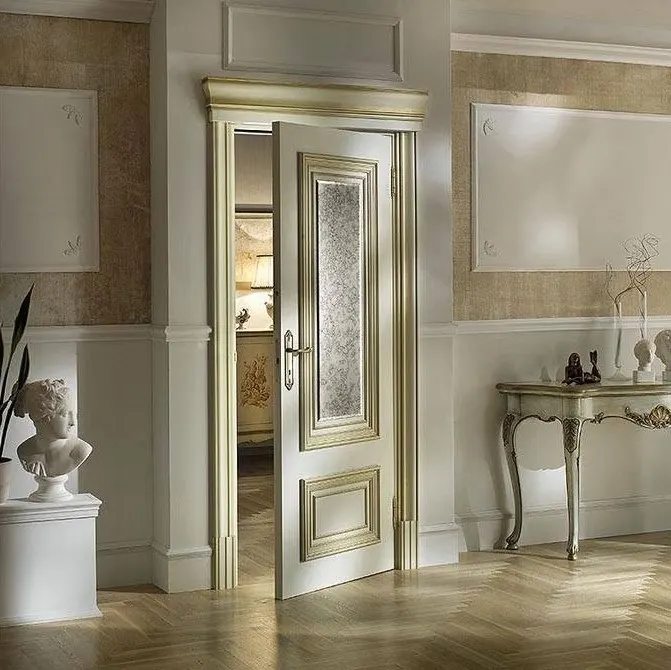
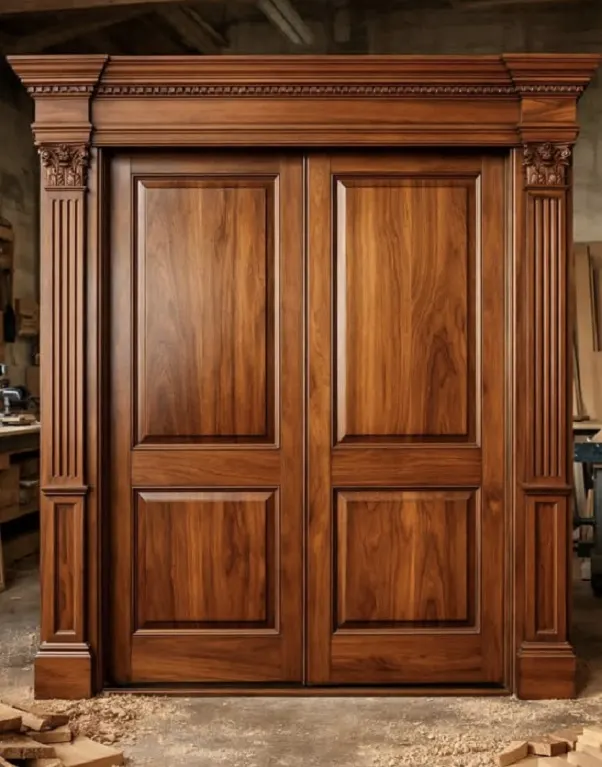
- Panelled and shaker-style doors: rails and stiles are fixed parts of the design. A handle that lands on a panel moulding or the junction between a rail and a panel looks untidy and can weaken the fixing area. The lock rail height is usually designed to match the intended handle centre line.
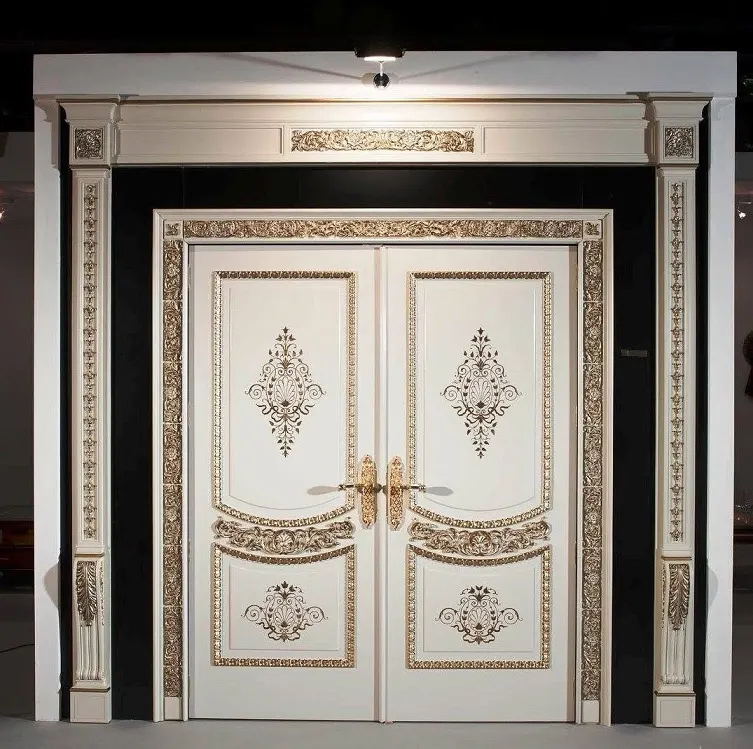
- Grooved and fluted models: vertical grooves are forgiving, but horizontal grooves or decorative bands need to be checked against the handle position so the hardware does not cut across a pattern.
- Glazed doors: the handle must sit on the frame or stile, not on glass. Stile width limits the handle choice and sometimes the position.
- Handleless and recessed pull models: the pull is routed into the leaf. Its position is fixed at manufacture and cannot be adjusted afterwards, so the height must be confirmed before production.
Lock block and reinforcement
Inside the door, the core usually includes a solid block or reinforcement at the lock position. If the handle height on your project is not the factory default, tell the manufacturer early so the block is placed in the right zone. Moving the handle after the door is made may not be possible if it falls outside this reinforced area.
Electronic locks and other hardware that share the zone
Hotel doors often carry more than a single handle. An electronic lock body, a card reader, a deadbolt, a privacy indicator and sometimes a door contact all compete for space in the same zone of the leaf. The lock supplier's template should drive the final handle position, not the other way around.
Request the lock template or technical drawing before you finalise the door schedule. This way the factory can route the leaf correctly the first time. For more detail on this topic, our guide to preparing wooden doors for electronic locks covers routing and cable paths.
Practical placement tips for hotel projects
- Set one standard handle centre line for all typical guest room doors and write it on the door schedule.
- List accessible room doors as a separate type with their own handle height and handle style.
- Keep the same datum, usually finished floor level, in all drawings and quotations.
- Check handle height against any horizontal door design features, such as rails or grooves.
- Align the handles on wardrobe, bathroom and entrance doors where they are visible together in a room, so the interior looks consistent.
- Approve the position on a mock-up door before the full order is produced.
Common mistakes to avoid
A few recurring problems are easy to prevent with a little planning.
- Different datums: one drawing measures from structural floor and another from finished floor, producing handles that sit at different heights in the finished building.
- Hardware chosen after production: a lock with a different backset or case size than the one used for routing leaves the leaf unusable or needs a visible repair.
- Ignoring door height variations: in a taller door, a fixed ratio from the top may seem logical, but handles should still be set from the floor.
- Skipping the mock-up check: proportions that look right on a drawing may feel too high or low in the real space.
What to send your door manufacturer
To get an accurate offer and a correctly machined door, include the following with your enquiry:
- The door schedule with door types, sizes and handing
- The handle centre line height and the reference datum
- The hardware list, including lock model and handle type
- The lock or handle supplier's technical template if it is available
- Any accessibility requirements that apply to specific rooms
- Local code references you are working to, if relevant
With these details, we can confirm the lock block position, check the handle against the door model and flag any conflicts before production begins.
Next step
If you are planning a hotel door package, send us your door schedule, drawings and hardware details. We will review the handle positions against the door models you are considering and come back with suggestions, an estimated lead time and shipping options for your project.
Sıkça Sorulan Sorular
What is the standard door handle height in hotels?
Most hotel doors use a handle centre line of roughly 900 to 1,050 mm (35.4 to 41.3 in) above finished floor level. There is no single global standard, so confirm the exact figure against the building and accessibility codes of the country where the hotel is located.
Should accessible hotel rooms have a different handle height?
Often yes. Accessibility rules usually set reach limits and prefer lever handles that need no tight grip. List accessible room doors as a separate type on your door schedule and check their handle height against the local standard rather than copying the standard guest room figure.
Is door handle height measured from the structural floor or the finished floor?
It should normally be measured from the finished floor level, because carpet, stone or timber build-ups change the real position. State the datum on the door schedule so the factory, installer and designer all work from the same reference.
Can the handle position be changed after the door is made?
Sometimes, but not always. The core has a lock block at a set position, and recessed pulls are routed at fixed positions. Moving a handle outside the reinforced zone can weaken the leaf, so confirm the height before production and approve it on a mock-up door.
Does the door design affect where the handle can go?
Yes. Panelled and shaker-style doors have rails that should match the handle centre line, and glazed doors need the handle on the stile. Grooved designs may also conflict with the hardware. Discuss handle height when choosing the door model.
Every hotel project is different. Send us your drawings or room schedule for a tailored proposal on materials, lead time and shipping.