Door Model Selection for Villa Resorts and Private Residences: Scale, Privacy and Feel
Villa interior door models need to feel like part of a home, not a hotel corridor. This guide covers scale, privacy, finish and supply planning for developers of luxury villas and resort residences.
Villa interior door models are judged differently from standard hotel doors. Guests and owners walk through a villa as they would a private home, so proportion, weight, sound and finish matter as much as price per leaf. If you are developing a villa resort or a high-end private residence, the right door models give each space a sense of arrival and privacy without creating problems on site.
Below we explain how to choose door scale, leaf configuration, privacy details and finishes for villa projects, and how to brief a factory so the doors are made to your drawings.
Why villas need a different approach from hotel corridors
In a hotel, doors repeat hundreds of times and are specified for speed of cleaning and maintenance. In a villa, there may be only 15 to 40 openings, and each one is seen up close. Buyers expect residential-quality detail: generous proportions, quiet operation and a consistent design language from the entrance to the bathroom.
That shifts the specification in three ways:
- Scale: taller and wider leaves than a typical room door.
- Feel: weight, soft closing action and tactile finishes.
- Privacy: sound control between bedrooms, living areas and service zones.
Scale: tall and oversized door models
Tall doors for villas are one of the simplest ways to make a space feel luxurious. Where a standard leaf is about 2,100 mm (82.7 in) high, villa projects often use leaves of 2,400 mm (94.5 in) or more, sometimes running close to the ceiling. Widths of 1,000 mm (39.4 in) or more suit main bedrooms and living areas.
Before you approve an oversized design, check the following:
- Ceiling height and opening height: the leaf, frame and any transom must fit within the finished floor to ceiling dimension.
- Weight: taller leaves are heavier, so hinge number, hinge size and frame fixing need to be planned from the start.
- Flatness: large leaves are more sensitive to humidity and construction quality. A balanced construction and sealed edges reduce the risk of warping.
- Handling: check that the leaf can pass through stairwells, gates and openings on site before delivery.
Exact limits depend on the core, thickness and design, so send us the opening sizes and we will confirm what is practical for each model.
Full-height and ceiling-height leaves
A full-height door with a concealed or minimal frame creates a clean, architectural look. It works best with flush or finely grooved models, because the eye follows the vertical lines. It also demands accurate walls and floors, since small deviations are more visible.
Transoms and side panels
If the ceiling is very high, a standard leaf with a fixed transom or side panel can be more stable than one giant leaf. It also lets you use glass or a matching timber panel for light and proportion.
Leaf configuration: single, double and pivot
Villa layouts often call for something beyond a single hinged leaf. Common options include:
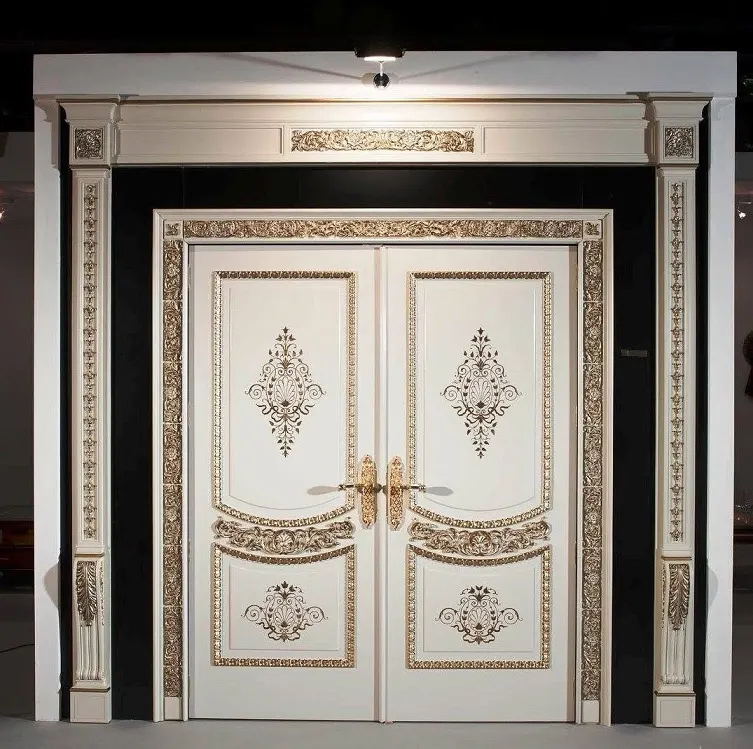
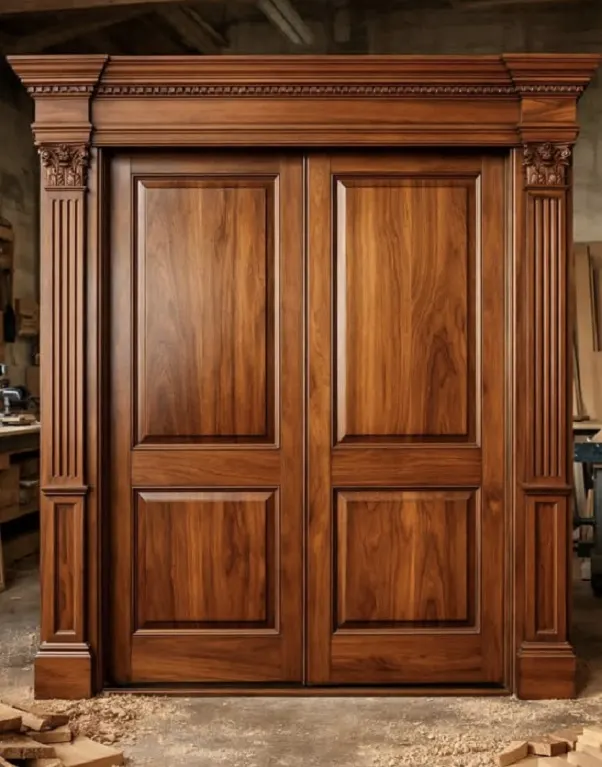
- Double-leaf doors for entrance halls, living rooms and master suites. Equal or unequal leaves are both possible.
- Pivot doors for statement entrances inside the house, such as to a wine room or a primary suite. They need correct floor and top fixing details.
- Sliding and pocket doors to save swing space between living areas, dressing rooms and bathrooms.
- Concealed or flush-to-wall doors for service routes and storage, so the wall reads as one clean surface.
Each configuration changes the hardware, the frame and the wall build-up, so decide early rather than leaving it to the installation stage.
Privacy: sound, sight lines and seals
Privacy is a core part of the villa experience, particularly in resorts where guests may share a family or group villa. Think about it zone by zone.
| Area | Privacy priority | Design points to consider |
|---|---|---|
| Bedrooms | Sound and sight lines | Heavier core, perimeter seals, drop bottom seal where needed |
| Bathrooms | Visual privacy and moisture | Sealed edges, moisture-suitable core, solid or frosted panels |
| Living and dining | Flexibility | Double or sliding doors, glazed models with privacy options |
| Staff and service areas | Discretion | Concealed doors that match wall finishes |
| Home cinema, study, wine room | Acoustic or climate separation | Thicker leaf, seals, tested acoustic specification if required |
If you need a specific sound reduction level, state it in the brief and ask for the supporting test information for the door assembly. Acoustic results depend on the whole set, including frame, seals and installation, not only the leaf.
Feel: finishes, grain and details
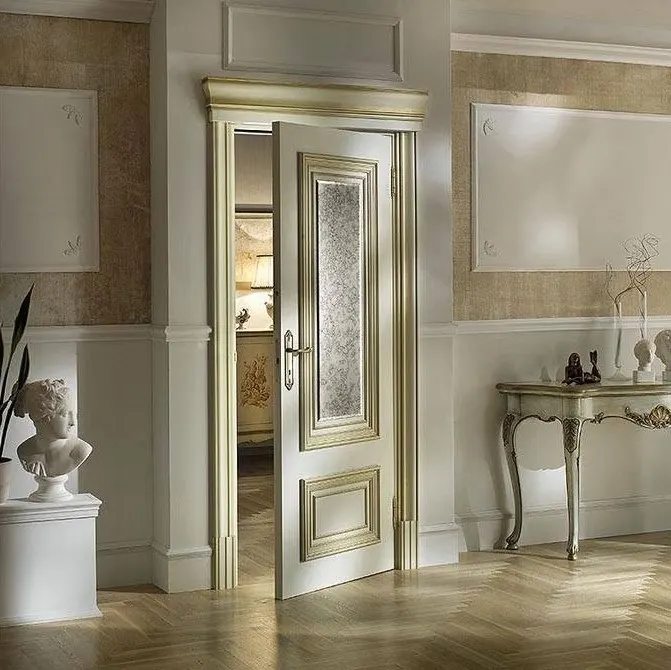
In private residence door design, the finish does much of the work. A veneered door in oak or walnut has natural depth, while a lacquered door can follow a precise colour palette. Some options to discuss with your designer:
- Veneer with matched grain: book-matched or vertical grain layouts give a calm, high-end look.
- Lacquer and paint: good for colour-led interiors and fine profiles, with matt or satin sheens.
- Fluted and grooved surfaces: add texture and shadow lines, and can echo wall panelling.
- Metal inlays and trims: brass or dark metal lines add a tailored detail, with some care needed in cleaning.
- Handleless or recessed pulls: reduce visual clutter on wardrobe and service doors.
Dark finishes and very pale finishes show marks differently, so consider who will maintain them. A private owner may accept a patina; a resort operator may prefer a finish that is easy to touch up.
Coordinating doors with the rest of the villa
Doors read best when they belong to the same family as the joinery. Matching the door finish to wall panelling, wardrobes and kitchen cabinetry creates continuity, and it helps if the same factory produces them. Palmiye makes doors alongside wardrobes, wall panelling and other interior woodwork, so colour and grain can be reviewed together on a single sample board.
Also check that door swing does not collide with furniture, that handle heights are consistent and that frames suit the wall thickness of each partition.
Villa resort versus private residence: what changes
A private residence usually accepts more bespoke detail and fewer repeated models. A villa resort may have several villa types repeated across the site, which allows you to standardise door models, order in a single production run and keep spare leaves for later repairs.
For resorts, we also suggest thinking about humidity, sun exposure and sea air for doors near terraces and pools, and choosing finishes accordingly.
How to brief a factory for villa doors
A clear package speeds up pricing and reduces revisions. Send us:
- A door schedule with opening sizes, quantities, handing and location.
- Architectural elevations and sections showing the intended door models.
- Finish references, such as a veneer species, RAL or Pantone colour, or a sample photo.
- Hardware details, including hinge type, lock preparation and any electronic locks.
- Destination country, preferred Incoterms such as FOB or DAP, and your target timeline.
From there, we can prepare shop drawings, a sample or mock-up door for approval, then production, export packing and shipping. Lead time and cost depend on the number of leaves, the size and the finish, so we confirm them after reviewing your drawings rather than quoting a generic figure.
Checklist before you approve a villa door model
- Is the leaf height consistent with ceiling height and sight lines?
- Have hinge type and number been matched to the leaf weight?
- Does each zone have the right privacy and acoustic detail?
- Is the finish suitable for the climate and for who will maintain it?
- Has a sample been approved under the lighting of the actual villa?
- Can the leaves physically reach the opening on site?
Next step
If you are planning a villa resort or a private residence, send us your door schedule or architectural drawings. We will review the openings, suggest suitable door models and come back with a quotation and shipping options for your project.
Sıkça Sorulan Sorular
How tall can villa interior doors be?
Many villa projects use leaves around 2,400 mm (94.5 in) high, and taller designs are possible. The practical limit depends on the core, thickness, design, hinge system and how the leaf can be transported and handled on site. Send your opening sizes so we can confirm what suits each model.
Are tall doors more likely to warp?
Larger leaves are more sensitive to humidity changes and uneven construction, so they need a balanced build, sealed edges and a stable core. Proper storage on site and correct installation also matter. A sample or mock-up helps you check performance before full production.
Which door types suit luxury villa entrances inside the house?
Double-leaf and pivot doors are popular for halls, living areas and primary suites. Both need careful planning of hinges or pivots, floor fixing and frame details. Flush or finely grooved designs with matched veneer often give the most refined look.
Can villa doors match wall panelling and wardrobes?
Yes. When doors, panelling and wardrobes are made in the same factory, veneer, grain direction and colour can be coordinated on one sample board. This creates a continuous look across the villa and reduces finish mismatches between suppliers.
What should I send to get a quotation for villa doors?
Send a door schedule with sizes, quantities and handing, plus elevations, finish references, hardware details and your destination country. Mention your preferred Incoterms and timeline. With these details we can prepare an accurate quotation and propose a production and shipping plan.
Every hotel project is different. Send us your drawings or room schedule for a tailored proposal on materials, lead time and shipping.