
White Oak Mastery and Global Logistics: The Production, Import, and Export of Solid Oak Wood Tables and Coffee Tables in Turkey
Solid oak has become the defining architectural material of contemporary residential and hospitality interiors worldwide. Revered for its unmistakable cathedral grain, prominent medullary rays, high Janka hardness (~1,360 lbf), and warm, organic aesthetic, solid oak dominates Scandinavian, Japandi, modern organic, and industrial furniture collections across Europe, North America, and the Middle East. At the heart of this global supply network sits Türkiye—a powerhouse manufacturing hub where abundant regional oak reserves, imported European white oak boules, advanced CNC engineering, and rapid multimodal transit converge.
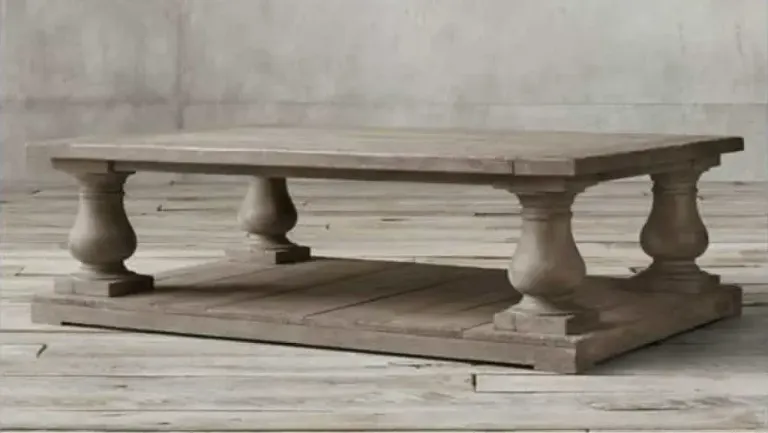
For B2B wholesale buyers, architectural procurement directors, timber importers, and customs compliance specialists, mastering the production, import, and export of solid oak wood tables and coffee tables in Turkey unlocks decisive competitive advantages in landed unit cost, bespoke joinery, and lead-time velocity.
Unlike softwoods or porous tropical species, working with solid oak demands specialized metallurgical, chemical, and kiln-drying expertise. Oak’s dense cellular structure, slow moisture release, and high natural tannic acid content require calibrated vacuum kiln schedules, stainless-steel fasteners, and non-reactive finishing chemistries. Simultaneously, cross-border trade requires exact fluency in 12-digit Turkish GTİP customs tariff classifications, Additional Customs Duties (İGV), A.TR/EUR.1 preferential origin rules, and European Union Deforestation Regulation (EUDR) geolocation traceability.
1. Why Solid Oak Dominates Türkiye’s Export Furniture Strategy
Within Türkiye’s $4.5+ billion annual furniture export sector, solid oak dining tables, extendable oak tables, and sculptural solid oak coffee tables represent the single fastest-growing product category in Western European and North American retail programs.
Strategic Advantages of Sourcing Solid Oak Tables from Türkiye
1. Proximity to European White Oak Forests and Consumer Markets:
• Türkiye’s northwestern manufacturing hubs sit directly along the logistics corridor linking Eastern and Central European oak sawmills (Ukraine, Romania, Croatia, France) with Western European retail ports (Rotterdam, Hamburg, Antwerp, Felixstowe).
• Overland TIR trucking from İnegöl or Istanbul delivers finished solid oak tables to Munich, Vienna, or Paris in 4 to 6 days, while containerized maritime freight reaches Northern Europe in 7 to 12 days and US East Coast ports in 16 to 22 days.
2. Agile Custom Engineering & Low MOQs:
• Turkish factories routinely accept 15 to 25 units per SKU, enabling international furniture brands to mix solid oak dining tables, nesting oak coffee tables, console tables, and matching benches in a single 40ft High Cube container.
3. Customs Union & FTA Tariff Advantages:
• Under the EU-Türkiye Customs Union, solid oak tables manufactured or placed into free circulation in Türkiye enter all 27 EU member states at 0% import customs duty via an A.TR Movement Certificate, while bilateral Free Trade Agreements preserve duty-free access to the United Kingdom, EFTA states, South Korea, and the Balkans.
2. Regional Manufacturing Hubs for Solid Oak Tables in Türkiye
Understanding the production, import, and export of solid oak wood tables and coffee tables in Turkey begins with mapping Türkiye’s specialized woodworking clusters:
İnegöl (Bursa): The Epicenter of Export-Grade Solid Oak Tables
Located 45 kilometers east of Bursa with rapid highway access to Gemlik Port, İnegöl accounts for over 40% of Türkiye’s furniture exports.
• Oak Specialization: Heavy 4 cm to 5 cm thick solid European white oak dining tables, Swiss-edge beveled oak tables, fluted-pedestal solid oak coffee tables, and wire-brushed matte oak collections.
• Industrial Ecosystem: Factories inside the İnegöl Furniture Organized Industrial Zone (İMOS) operate automated timber optimization scanners, high-frequency vacuum kilns, 5-axis CNC machining centers, and robotic flat-line finishing systems.
Ankara (Siteler): Bespoke Architectural Oak Joinery & Contract Hospitality
Siteler is one of Europe’s largest traditional woodworking districts, uniting master joiners with modern contract factories.
• Oak Specialization: Custom herringbone and chevron solid oak parquetry tabletops, large-span conference tables (300 cm to 450 cm), hand-turned solid oak bases, and bespoke hospitality (HORECA) table programs.
Kayseri: Automated High-Volume Solid Oak Production
Kayseri in Central Anatolia specializes in high-efficiency industrial production, manufacturing standardized solid oak dining sets and knock-down (KD) oak coffee tables for large European catalog chains and big-box furniture retailers.
Istanbul (Masko, Modoko, and Tuzla/İkitelli Industrial Parks)
Istanbul serves as the international showroom gateway alongside luxury workshops crafting architectural composite tables pairing solid white oak with natural travertine, marble plinths, and brushed brass bases.
3. Oak Timber Species, Forestry Governance, and Wood Science
Success in the production, import, and export of solid oak wood tables and coffee tables in Turkey depends on selecting the right botanical oak species and managing its unique physical chemistry.
Domestic vs. Imported Oak Species in Turkish Factories
Oak Species Botanical Name Primary Origin Janka Hardness Grain & Anatomical Profile Ideal Table Applications
European White Oak Quercus robur (Pedunculate) & Quercus petraea (Sessile) Domestic Thrace/Black Sea & Imported (Ukraine, Romania, France, Croatia) ~1,360 lbf Prominent silver medullary rays (quarter-sawn), closed tyloses pores, golden-honey to light brown heartwood Architectural dining tables, modern organic coffee tables, wire-brushed matte collections
Anatolian / Turkey Oak Quercus cerris Domestic Türkiye (Aegean, Marmara, Central Anatolia) ~1,420 lbf Bold open grain, warmer reddish-brown heartwood, higher density and shrinkage rate Rustic farmhouse dining tables, heavy turned table legs, structural aprons
Hungarian / Italian Oak Quercus frainetto Domestic Thrace & Balkans ~1,380 lbf Straight, even texture, rich warm ochre tone, excellent machining properties Scandinavian-style coffee tables, fluted pedestal bases, fine edge profiles
American White Oak Quercus alba Imported (USA – Appalachian & Northern regions) ~1,360 lbf Uniform light olive-brown tone, extremely consistent kiln-dried FAS/1F grading High-volume multi-container retail runs requiring strict batch color consistency
American Red Oak Quercus rubra Imported (USA) ~1,290 lbf Open, porous vascular structure, pinkish-red undertone, accepts dark stains readily Stained or ebonized solid oak coffee tables, traditional indoor dining sets
Forestry Auctions (OGM) and Legal Timber Provenance
Domestic Turkish oak is harvested from state-managed forests in Thrace (Kırklareli, Tekirdağ) and the Western Black Sea region (Bolu, Düzce, Zonguldak, Kastamonu) under strict sustainable yield plans administered by the Turkish General Directorate of Forestry (Orman Genel Müdürlüğü - OGM). Logs are sold via official OGM auctions and tracked via statutory forestry transport permits (Nakliye Tezkeresi). Imported European and American white oak lumber enters Türkiye accompanied by phytosanitary certificates, commercial bills of lading, and FSC/PEFC Chain of Custody documentation.
Kiln-Drying Science for High-Density Solid Oak
Oak is one of the most challenging commercial hardwoods to dry without degrade. Because white oak cells are plugged with tyloses (balloon-like cellular growths that make white oak waterproof), moisture migrates slowly from the core to the surface. Rapid drying causes surface checking (fine hairline cracks), end-splitting, and internal honeycombing.
1. Extended Air-Drying Pre-Conditioning: Freshly sawn 52 mm to 80 mm oak boules are stickered outdoors under shade for 12 to 24 months to lower moisture content gently from ~65% down to ~25%.
2. Low-Temperature Computerized Kiln & Vacuum Drying: Oak is loaded into computerized dehumidification kilns or high-frequency vacuum kilns, where gentle temperature ramps and high relative humidity prevent surface tension while extracting core moisture.
3. Target Export Moisture Content (MC): Export-compliant Turkish manufacturers strictly dry solid oak to 8% ± 1% MC for North American, Northern European, and Gulf indoor destinations, and 10% to 12% MC for temperate coastal markets.
4. Equalization & Stress Relief: A final high-humidity steam conditioning cycle relieves casehardening stresses so wide oak planks remain flat after CNC milling.
4. Production Engineering: Joinery, Tannin Chemistry, and Finishing
Manufacturing export-grade solid oak tables requires specialized engineering protocols across every stage of the production, import, and export of solid oak wood tables and coffee tables in Turkey.
Lumber Grading and Stave Assembly
• FAS / Prime Grade vs. Rustic / Character Grade:
• Prime / AB Grade Oak: Virtually knot-free, uniform heartwood color with zero sapwood, favored for minimalist Scandinavian and modern architectural dining tables.
• Rustic / Character Grade Oak: Features natural sound knots, pin knots, and dramatic cathedral grain filled with matte black or dark brown two-component wood epoxy—hugely popular for loft and modern rustic coffee tables.
• Full-Length Stave Construction: Export-grade oak tabletops are constructed from continuous, full-length staves (8 cm to 14 cm wide) arranged with alternating growth-ring orientations (bark-side up, bark-side down) to neutralize seasonal cupping forces.
Managing Oak’s Tannic Acid Reactivity
White oak contains high concentrations of tannic acid. When wet oak or waterborne coatings contact bare carbon steel, a chemical reaction produces irreversible black iron-tannate stains. Top Turkish factories prevent this through strict metallurgical controls:
• Stainless Steel (304/316) & Brass Hardware: All threaded inserts, C-channel mounting bolts, figure-8 fasteners, and alignment pins installed into solid oak are stainless steel, brass, or zinc-dichromate coated—never bare mild steel.
• Tannin-Blocking Primers: When applying whitewashed or pale Scandinavian waterborne lacquers, factories apply specialized cationic tannin-blocking sealers to prevent yellow-brown tannin bleed-through.
Structural Anti-Warp Stabilization
A 100 cm wide solid oak tabletop naturally expands and contracts across its width by 4 mm to 7 mm across seasonal humidity swings. Turkish engineers protect structural flatness using:
1. Recessed Steel C-Channels: Powder-coated steel C-channels routed flush into the underside of the oak slab, secured with threaded brass inserts and oversized slotted bolt holes that allow cross-grain expansion while locking the tabletop flat.
2. Sliding Dovetail Battens: Tapered solid oak cross-battens fitted into precision dovetail grooves milled across the underside of wide slabs.
3. EN 204 D3/D4 & PUR Adhesives: Structural stave joints are bonded with water-resistant D3/D4 PVA or moisture-curing polyurethane (PUR) adhesives engineered to withstand container temperatures exceeding 55°C–60°C during sea transit.
Surface Texturing and Finishing Systems
• Wire-Brushing (Textured Grain): Rotating stainless-steel or Tynex nylon abrasive brushes remove softer earlywood fibers while leaving harder latewood ridges raised, accentuating oak’s tactile 3D grain before oiling.
• Ammonia Fuming (Smoked Oak): Exposing solid white oak to controlled ammonia vapor in sealed chambers reacts with natural tannins to darken the wood uniformly throughout its depth—producing rich, warm smoked-oak tones without surface pigment stains.
• Zero-VOC Hardwax Oils (Rubio Monocoat, Osmo): Molecularly bond with oak cellulose fibers to preserve natural matte warmth, meet EN 71-3 food-contact safety standards, and allow end-consumers to spot-repair scratches effortlessly.
• 2K Matte Polyurethane (PU) & Waterborne Acrylics: Provide maximum resistance against red wine, coffee rings, heat, and abrasion for commercial hospitality tables.
5. Customs Classification: 12-Digit GTİP and HS Codes
Every inbound and outbound transaction in the production, import, and export of solid oak wood tables and coffee tables in Turkey must be declared under the 12-digit Turkish Customs Tariff Schedule (Türk Gümrük Tarife Cetveli - GTİP), harmonized with the international HS and EU Combined Nomenclature (CN).
GTİP Code (12-Digit) Official Tariff Description Applicable Solid Oak Table & Coffee Table Products
9403.60.10.00.00 Wooden furniture of a kind used in the dining room and living room Solid oak dining tables, extendable oak tables, oak coffee tables, nesting tables, side tables, console tables
9403.30.11.00.00 Wooden furniture of a kind used in offices (height ≤ 80 cm) – Desks Executive solid oak office desks, study tables
9403.30.19.00.00 Wooden furniture of a kind used in offices (height ≤ 80 cm) – Other Office lounge solid oak coffee tables, low wooden meeting side tables (≤ 80 cm height)
9403.30.91.00.00 Wooden furniture of a kind used in offices (height > 80 cm) High solid oak conference tables, standing wooden meeting tables
9403.60.90.00.00 Other wooden furniture (not elsewhere specified) Outdoor white oak garden tables, entryway tables outside dining/living scope
9403.91.00.00.00 Parts of furniture, of wood Unfinished or finished solid oak tabletops, oak table slabs, turned solid oak table legs
Mixed-Material Classification Rules (GRI 3b)
When a solid oak tabletop is paired with powder-coated steel spider legs, marble plinths, or tempered glass shelves, General Rule for the Interpretation of the Harmonized System (GRI) 3(b) governs classification by essential character. Because the solid oak top provides primary surface utility, value, weight, and aesthetic identity, the table remains classified under 9403.60.10.00.00. For complex hybrid designs, importers and exporters can obtain a Binding Tariff Information (Bağlayıcı Tarife Bilgisi - BTB) ruling from the Turkish Ministry of Trade.
6. Exporting Solid Oak Tables from Türkiye: Trade Agreements & EUDR
Türkiye’s export regime grants 0% export customs duty, 0% export VAT, and domestic input VAT refunds for registered manufacturers.
Preferential Origin Certificates by Export Destination
1. European Union (A.TR Movement Certificate): Under the EU-Türkiye Customs Union, solid oak tables in free circulation in Türkiye enter all 27 EU member states at 0% import duty when accompanied by an A.TR certificate, even if the raw oak lumber was imported from Ukraine, Romania, or the USA and manufactured into tables in Türkiye.
2. United Kingdom, EFTA, South Korea, and FTA Partners (EUR.1 / Invoice Declaration): Exports to FTA partner countries qualify for 0% preferential tariffs via an EUR.1 Movement Certificate or Approved Exporter declaration, subject to meeting bilateral Rules of Origin thresholds (proving substantial manufacturing transformation in Türkiye).
3. United States, Canada, and Gulf States (Certificate of Origin): Non-preferential shipments require a Chamber of Commerce-endorsed Certificate of Origin (Menşe Şahadetnamesi), Commercial Invoice, and Packing List.
EU Deforestation Regulation (EUDR) Compliance for Solid Oak
For companies executing the production, import, and export of solid oak wood tables and coffee tables in Turkey destined for the European Union, compliance with Regulation (EU) 2023/1115 (EUDR) is mandatory across Chapter 94 wooden furniture:
• Forest Plot Geolocation Traceability: Turkish exporters must supply EU operators with exact GPS coordinates (latitude/longitude polygons for parcels > 4 hectares) of the forest plots where the oak timber was harvested, along with harvest dates.
• Dual-Origin Documentation:
• For Turkish-grown oak: Supported by Turkish General Directorate of Forestry (OGM) auction records and Nakliye Tezkeresi transport permits.
• For imported European/American oak lumber processed in Türkiye: Exporters must pass through the upstream supplier’s EUDR Due Diligence Statement (DDS) reference numbers or harvest geolocation data linked to the Turkish lumber import customs declaration.
• FSC / PEFC Chain of Custody: Active FSC or PEFC certification provides segregated batch tracking that streamlines EUDR compliance audits for major European furniture retailers.
7. Importing Solid Oak Tables and Oak Lumber into Türkiye
Understanding the production, import, and export of solid oak wood tables and coffee tables in Turkey covers two distinct inbound flows: importing finished solid oak tables (primarily Danish, Italian, German, and Asian oak furniture) and importing raw/kiln-dried oak sawn timber (HS 4407.91) for domestic manufacturing.
Taxes and Duties on Finished Solid Oak Tables Imported into Türkiye
To protect domestic manufacturers, Türkiye levies a multi-layered tax structure on imported Chapter 94 wooden furniture:
1. Base Customs Duty (Gümrük Vergisi): 0% for EU (with A.TR) and FTA partners (with EUR.1); 0% to 5.6% for non-FTA third countries (China, Vietnam, India, USA).
2. Additional Customs Duty (İlave Gümrük Vergisi - İGV): Typically 15% to 25% of the CIF value (and up to 50% on specific trade-protected lines) for non-EU/non-FTA origin furniture. (Note: Transshipping Asian-made oak tables through an EU distributor with an A.TR certificate does NOT waive İGV unless EU preferential origin is proven.)
3. Value Added Tax (Katma Değer Vergisi - KDV): 20% calculated cumulatively on (CIF Value + Customs Duty + İGV + Port/Customs Clearance Expenses).
4. KKDF (Resource Utilization Support Fund): 6% on the CIF value if financed via deferred payment terms (cash against goods / mal mukabili or acceptance credit) rather than advance payment (peşin) or irrevocable sight L/C.
Phytosanitary and Product Safety Controls
• Phytosanitary Certificate (Bitki Sağlık Sertifikası): Mandatory for kiln-dried oak lumber (4407.91), semi-finished oak tabletops (9403.91), and bark-on live-edge oak slabs to verify freedom from quarantine pests such as oak wilt fungus (Bretziella fagacearum) and wood-boring beetles, inspected at entry by the Turkish Ministry of Agriculture and Forestry.
• TAREKS & KKDİK Compliance: Electronic risk-based inspection ensuring surface coatings and glues comply with Turkish chemical safety limits (heavy metals, formaldehyde, and restricted VOCs).
8. Packaging Engineering, ISPM-15, and Container Load Optimization
Solid oak is dense (~720–760 kg/m³), making solid oak tables significantly heavier than pine, ash, or walnut equivalents. A 220x100 cm solid oak dining table with a 4 cm top weighs 75 kg to 95 kg, requiring heavy-duty packaging engineering.
Drop-Tested Packaging Architecture (ISTA 2A / 3A)
• SKD (Semi-Knocked-Down) Shipping: Over 90% of commercial solid oak dining and coffee tables ship with detached legs/pedestals packed in separate, barcode-matched cartons—reducing cubic freight volume by 60% to 75%.
• Multi-Barrier Cushioning: Non-abrasive EPE micro-foam wrap prevents finish imprinting; high-density EPS foam corner blocks and L-profile edge guards absorb corner drops; double-wall (BC-flute) or triple-wall kraft cartons (250–275 lbs burst strength) resist warehouse stacking loads.
• Moisture Control: Calcium chloride desiccant poles hung along container walls prevent condensation ("container rain") during ocean voyages.
ISPM-15 Wood Packaging Rules
Under ISPM-15, all solid wood pallets, crates, and dunnage used in international shipping must undergo Heat Treatment (HT) (core wood temperature ≥ 56°C for at least 30 minutes) and carry the official IPPC wheat-stamp certification. Crates constructed solely from plywood, OSB, or MDF are exempt from ISPM-15 heat-treatment requirements.
Container Load Benchmarks for Solid Oak Tables
• 20ft Standard Container (~28–30 CBM usable, ~28,000 kg max payload): Fits 35 to 50 SKD solid oak dining tables (180–220 cm) or 120 to 175 SKD solid oak coffee tables.
• 40ft High Cube Container (~65–68 CBM usable, ~28,500 kg max payload): Fits 80 to 115 SKD solid oak dining tables or 260 to 380 SKD solid oak coffee tables. (Note: Because solid oak is heavy, 40ft High Cube containers frequently reach maximum road weight limits before filling 100% of cubic volume—freight planners balance heavy dining tabletops with lighter coffee tables or chairs).
9. Quality Assurance, Inspection Checklists, and Trade Finance
International buyers and Turkish exporters protect margins by embedding strict technical acceptance criteria into purchase agreements:
1. Pre-Shipment Inspection (PSI): Independent third-party inspectors verify finished batches prior to container loading—checking pinless moisture meter readings (8%–10% MC), tabletop flatness tolerances (< 2 mm deviation across a 2-meter straightedge), absence of iron-tannate staining around hardware, color consistency against master smoked/oiled oak swatches, and carton drop durability.
2. Payment Structures: Standard B2B transactions utilize 30%–40% T/T deposit upon order confirmation and 60%–70% balance upon clean PSI report and Bill of Lading copy, or an Irrevocable Letter of Credit (L/C) at sight for large-volume container programs.


