Hotel Door Models Explained: Flush, Panelled, Glazed and Barn Door Types for Hospitality
Hotel door models fall into a handful of families, each with its own look, cost profile and best use. This overview helps you recognise them before you build a door schedule or ask a factory for a quotation.
Hotel door models are best understood as a small number of families: flush, grooved or fluted, panelled, glazed, sliding and barn, and pivot. Each family suits particular zones of a hotel, and each affects cost, lead time and maintenance in a different way. This guide gives you a plain overview of what you will meet in a custom FF&E package, so you can talk to designers and manufacturers with confidence.
We are not comparing technical specifications in depth here. The aim is to help you recognise the main hotel door types, understand where they fit and know what to define before pricing starts.
Why door models matter in a hotel package
A hotel has hundreds of door openings, and the door is one of the most repeated elements in the building. A guest sees it in every corridor, and the operator opens, closes and repairs it daily. Choosing a model is therefore a design decision and an operating decision at the same time.
It also helps to separate three things that are often mixed up in early discussions:
- Model: the visual design of the leaf, such as flush, grooved or panelled.
- Construction: the core, facing material and edge detail inside and around the leaf.
- Function: fire, acoustic, accessibility or privacy requirements that the door must meet.
Almost any model can be built in different constructions, but some functions limit your choice of model. Keeping these three apart makes quotations much easier to compare.
The main families of hotel door models
Flush doors
A flush door has a smooth, flat face with no raised or recessed detail. It is the most common model for guest rooms because it is clean, adaptable and efficient to produce. The face can be veneer, HPL, paint or lacquer, so the same model can look warm and natural in one hotel and sharp and contemporary in another.
Flush doors are also the easiest to repair and to reorder years later. If you have a large number of identical openings, this family is usually the starting point.
Grooved and fluted doors
These are flush doors with machined vertical or horizontal lines in the face. The grooves add texture and shadow without the complexity of a full panelled design. They are popular in boutique and upscale hotels because they look distinctive while staying simple to maintain.
Ask how the grooves are finished, since lacquer or stain that collects in the cuts can show differences in colour. A sample is the safest way to judge this.
Panelled doors
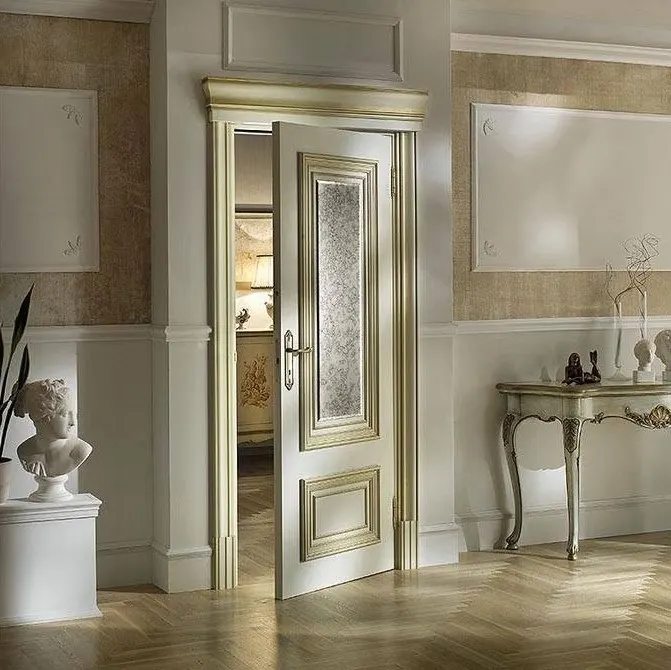
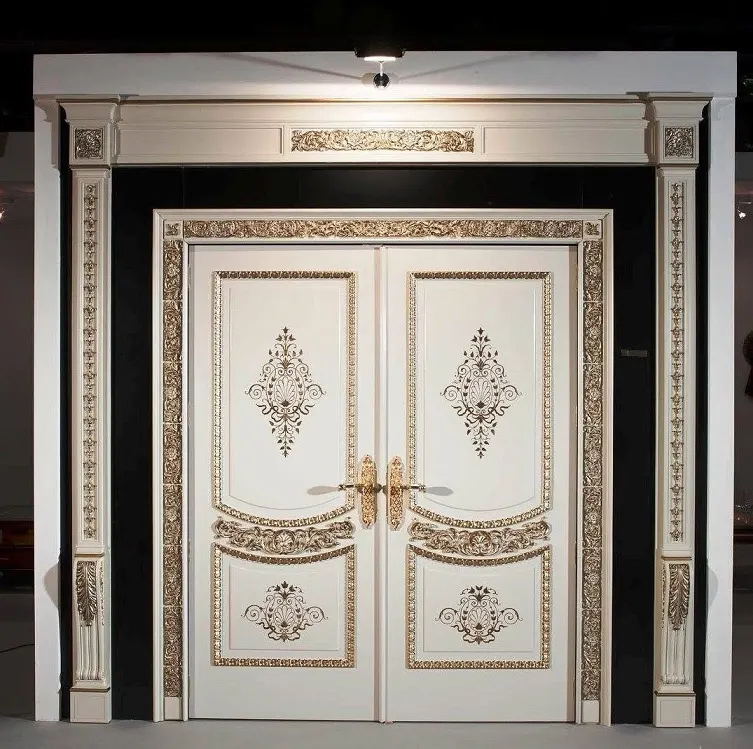
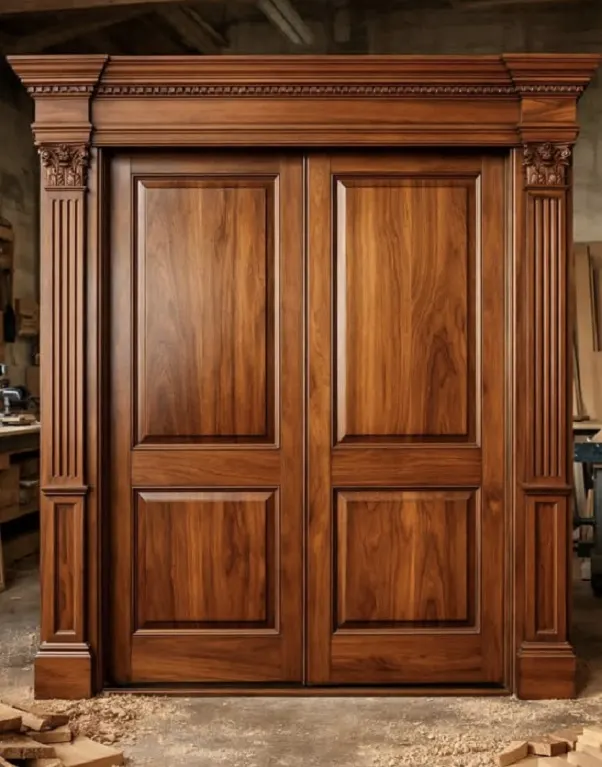
Panelled models have raised or recessed fields set within a frame of stiles and rails, or are machined to imitate that effect. They suit classic, heritage and some resort interiors, and they give a more traditional character. The profile detail means more machining and more finishing time, so expect the price and lead time to reflect that.
Shaker-style and moulded-skin variants sit in this family. They offer the panelled look at a more practical production cost, depending on the construction.
Glazed and glass-panel doors
Glazed doors include a glass insert, either as a small vision panel or as a large area within a timber frame. In hotels they appear in restaurants, meeting rooms, spa areas, bathrooms and bright connecting spaces. The glass type matters: safety glass is normally needed, and fire-rated glazing is a separate specification with its own requirements.
Privacy is the key design question. Frosted, reeded or tinted glass can let light through while keeping views blocked.
Sliding and barn doors
Sliding doors run on a track and do not need swing space. A barn door hangs from an exposed track above the opening, while other sliding systems run concealed or inside the wall as pocket doors. They are useful for bathrooms, wardrobes and suite partitions where a hinged door would collide with furniture.
The trade-offs are sound and privacy. Sliding doors usually leave gaps at the edges, so they are less suitable where acoustic separation matters. For that reason barn doors are most often used inside a room or suite, not as the main guest room entrance.
Pivot doors
A pivot door rotates on pins set in the floor and the head rather than on side hinges. It allows tall, wide or heavy leaves and creates a strong entrance statement, often for suites, villas and lobbies. Weight limits and floor fixing details need to be confirmed early, because the structure has to carry the load.
Other models you may be offered
- Louvred doors: slatted leaves for ventilation in service rooms or humid areas.
- Hidden or flush-to-wall doors: concealed doors that blend into wall panelling.
- Double-action swing doors: used in restaurant and service passages, often with vision panels.
- Folding and bi-fold doors: compact options for wardrobes and flexible spaces.
- Arched doors: custom shapes for heritage or resort projects.
Which model fits which hotel zone
The table below is a simple starting point. Final choices depend on your brand standards, fire and acoustic requirements and budget.
| Zone | Common models | Main consideration |
|---|---|---|
| Guest room entrance | Flush, grooved, panelled | Acoustics, fire, durability, lock preparation |
| Bathroom | Flush, sliding, pocket, louvred | Moisture resistance, space saving |
| Wardrobe | Hinged, sliding, slatted, mirror | Clearance, weight, ease of use |
| Suite entrance | Double-leaf, pivot, panelled | Presence, scale, hardware |
| Restaurant and kitchen passages | Double-action, glazed | Visibility, impact resistance |
| Meeting and banquet areas | Glazed, double-leaf, partition types | Sound control, flexibility |
How model choice affects cost and timing
Simple flush models are usually the most economical because production is repeatable. Profiled, panelled, curved or heavily glazed designs involve more operations, more materials or more finishing, so they typically cost more and can take longer. We cannot give a fixed ratio, because the effect depends on quantity, core, finish and hardware.
Finish approval and hardware details are also frequent causes of delay, regardless of the model. Settling them early protects your programme more than any single model decision.
What to decide before you ask for a quotation
Whichever door models you shortlist, a factory can price accurately only when the basics are clear. Prepare the following:
- A door schedule listing each opening, quantity, size and handing.
- The model family for each opening type, with reference images where possible.
- Fire, acoustic and accessibility requirements by location.
- Preferred facing material and finish, with colour references.
- Hardware and lock supplier information, including any electronic lock preparation.
- Destination country and shipping terms such as FOB or DAP.
For a new design, a sample door or a mock-up room is a sensible step. It lets the owner, designer and operator judge the model in real light before the full order is produced.
Practical tips for choosing between models
- Limit the number of different models. Fewer variants make production, spare parts and reorders simpler.
- Use the premium models where guests notice them most, such as suite entrances and lobbies, and simpler ones in back-of-house areas.
- Check swing clearances against furniture layouts before approving a model.
- Match door finishes with joinery and wall panelling so the interior reads as one design.
Next step
If you are planning a new hotel or a renovation, send us your door schedule, drawings or reference images. We will review the openings, suggest suitable models and constructions, and come back with an estimated lead time and shipping options for your project.
Sıkça Sorulan Sorular
What are the most common hotel door models?
Flush doors are the most common, especially for guest rooms. Grooved or fluted, panelled, glazed, sliding and pivot models are also widely used, depending on the zone and design style. Most hotels combine two or three models across the property.
Which door model is best for hotel guest rooms?
Flush models, including veneered or lacquered versions, are the usual choice because they are practical, easy to repair and simple to reorder. The right one still depends on fire, acoustic and finish requirements, so check them against your brand standards.
Can I use barn doors as hotel room entrance doors?
This is rarely advisable. Barn doors leave gaps at the edges, so they provide limited sound and privacy control and are hard to combine with fire requirements. They work better for bathrooms, wardrobes or partitions inside a room or suite.
Do different door models change the price?
Yes. Simple flush models are generally the most economical, while panelled, curved or heavily glazed designs need more machining, materials or finishing. Quantity, core, finish and hardware also affect price, so a quotation based on your door schedule is needed.
Do I need a sample before ordering a new door model?
For a new or custom design, a sample door or mock-up room is strongly recommended. It lets you check proportions, colour, finish and hardware preparation under real lighting before mass production begins.
Every hotel project is different. Send us your drawings or room schedule for a tailored proposal on materials, lead time and shipping.